Best Places to Visit in China by Travel Style (2026)
The best places to visit in China, grouped by what you want: history, big cities, scenery, food, beaches and winter. Each has a season, trip length and guide.
Updated 12 min readCSK Team
On this page11 sections
Quick answer: For history, go to Beijing, Xi'an and Dunhuang. For big-city energy, Shanghai and Shenzhen. For scenery, Zhangjiajie, Guilin and Yangshuo. For food and pandas, Chengdu. For beaches, Sanya. For winter, Harbin. Most first trips combine three or four of these by high-speed train, and 7 to 10 days is enough for a first visit.
China is too big for one "best" list. The right choice depends on what you want from the trip, how many days you have and the season you are travelling in.
Instead of a single countdown, the destinations below are grouped by travel goal, based on official tourism pages, published timetables and our own city guides. Prices are estimates in CNY with US$ at about 6.7.
How these places were picked
A destination earns a place here only if it works in practice for an independent foreign traveller. Each one had to pass four tests:
- You can reach it without a Chinese phone number, using public transport or an easy tour.
- It has English-friendly basics, such as station signs or booking pages.
- It offers a clear reason to go that other places on the same route do not share.
- We have a full guide on the site so you can plan the practical details.
This is an editorial selection rather than a visitor survey, and the logistics filter leaves out some major regions. Tibet requires a Tibet Travel Permit arranged through an agency (per tour operator guidance), and you should check current Xinjiang rules with your embassy. Check the entry and travel rules for your passport before planning a route into restricted areas.
If you want imperial history
China's headline historical sights run on strict real-name passport booking. The trade-off on the history route is flexibility: you cannot walk up to the gate on the morning you feel like going, so your daily schedule has to be locked in before you board your train. Confirm current release windows and hours on each site's official booking page when you lock in your dates.
Beijing
The Forbidden City, the Temple of Heaven and the Great Wall form the core of an imperial history trip. Allow 3 to 4 days, and aim for spring or autumn when walking across huge open courtyards and steep wall sections is most comfortable.
Book the Forbidden City first and build the rest of your Beijing days around it. It sells no same-day tickets, and online sales open seven days ahead at 20:00 on Palace Museum online booking (checked November 2026). Start with things to do in Beijing, pick your wall sector using the Great Wall sections comparison and balance the grand monuments with the hutong walking tour. See Temple of Heaven in the directory.
Xi'an
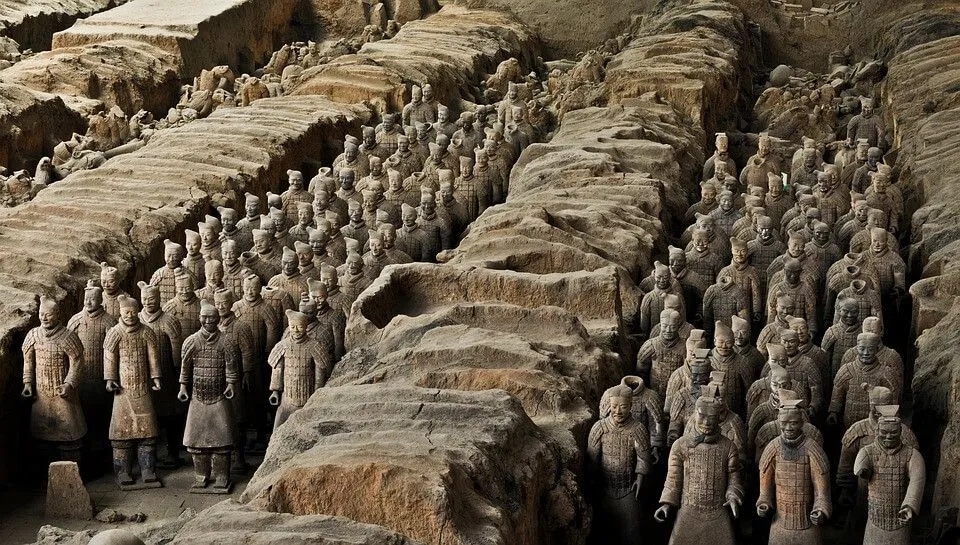
Xi'an pairs naturally with Beijing because it adds an earlier era of imperial history without requiring a flight. The fastest high-speed train from Beijing takes around 4 hours 10 minutes according to published timetables, making it an easy two-day stop for the Terracotta Army and the walkable City Wall.
Entry to the Terracotta Army is real-name, and all visitors, including foreigners, must reserve online ahead of time. The adult ticket is ¥120 (about US$18) year round, with hours running 8:30 to 17:00 from 16 March to 15 November and 8:30 to 16:30 from 16 November to 15 March on the Qin Shi Huang Mausoleum Site Museum ticket page (checked November 2026). See Terracotta Army and see how Beijing and Xi'an fit together in our 10-day China itinerary.
Dunhuang and Jiayuguan
If you want Silk Road history in the far west rather than capital-city palaces, head to Dunhuang and Jiayuguan. Because distances in the west are much longer than on the Beijing-to-Xi'an corridor, this route takes more time and rarely fits a short first trip.

The Mogao Caves hold Buddhist art made over many centuries, and visitor numbers are capped. Under the Dunhuang Academy 2026 Mogao Caves opening notice (notice dated 30 March 2026, checked November 2026), peak season runs from 1 April to 30 November (08:00 to 18:00, last check-in 16:10) and low season runs from 1 December to 31 March (09:00 to 17:00, last check-in 15:10). A regular visit includes a digital film at Hall 1 followed by 8 real caves and is capped at 6,000 tickets per day. There is also an overflow ticket that covers 4 real caves, with a 12,000 daily cap. Special caves open in limited numbers and are arranged at a counter after your regular or overflow visit.
Holders of foreign passports book real-name tickets through the "莫高窟参观预约网" WeChat service account (choose "预约购票" then "Ticket Booking"); the information line at 4008-333-715 answers questions only and does not take bookings. Do not drive straight to the caves, as there is no ticket office or visitor car park there. Instead, arrive at the Digital Exhibition Center for ID checks at least 30 minutes before your booked time. Heavy rain or heavy dust can close the caves, in which case unused booked tickets are refunded in full. Read the Dunhuang Mogao Caves guide, the Jiayuguan Pass Great Wall guide and see Mogao Caves.
If you want big cities
Big cities are the easiest entry points to China because international flights, fast trains and English signage are at their best. The choice comes down to whether you want one base with historic lanes and museums or a southern loop that crosses border systems.
Shanghai
Shanghai brings together the Bund, museums, old lanes and the widest food range in the east. Because it combines dense international flight connections with fast train links, it works well as the first or last stop of a trip, giving you an easy landing before you head inland. Allow 2 to 3 days. Read things to do in Shanghai, and if you only have time for one major northern or eastern hub, weigh the trade-offs in Beijing vs Shanghai.
Shenzhen and Guangzhou
In the south, Shenzhen and Guangzhou sit close together but offer very different days out. Shenzhen is built around modern skylines, waterfront parks and theme parks right next to Hong Kong; see things to do in Shenzhen. Guangzhou is the pick for Cantonese food and a river skyline; see the Canton Tower and Huacheng Square guide.
Hong Kong and Macau
Pairing Shenzhen or Guangzhou with Hong Kong and Macau is straightforward geographically, but remember that both are treated separately from the mainland for entry rules and payment apps. Crossing between them counts as leaving or entering mainland China, which matters for your visa or transit rules. See Hong Kong vs mainland China, the Avenue of Stars guide and the Ruins of St. Paul's in Macau.
If you want scenery
Scenery trips in China reward slower pacing than city breaks. Mountain and river routes depend heavily on visibility and rainfall, and several regions sit further from the main high-speed rail spine. Build in an extra day where you can so a single wet afternoon does not wipe out the view you came for.
Zhangjiajie
Zhangjiajie in Hunan is famous for the towering sandstone pillars that inspired the floating mountains in Avatar. A visit spreads across a large national forest park, cable cars and a glass bridge, so allow 2 to 3 days to cover the upper viewpoints and valley paths without rushing. Fog and rain can hide the view completely, so check the forecast before committing to which day you go up the mountain. Read the Avatar mountains guide and the glass bridge guide, and see Zhangjiajie National Forest Park.
Guilin and Yangshuo
Where Zhangjiajie is about high cliff viewpoints, Guilin and Yangshuo are about water and valley floors: a Li River cruise past karst peaks followed by rural cycling around Yangshuo. It is an easier, flatter option if you prefer cycling and boats to cable cars. Allow 2 to 3 days. Read the Guilin to Yangshuo guide and see Li River.
Yunnan: Kunming, Dali and Lijiang
Yunnan strings together old towns, lakes and mountains across changing elevations. Because altitude and weather shift as you move between stops, packing layers is essential even when the forecast in one town looks mild. Read Kunming as a Yunnan gateway to plan your entry, compare the two main stops in Lijiang vs Dali and see Lijiang Old Town.
Guizhou: Xiaoqikong and Detian
If you have already seen Guilin or want a newer route focused on waterfalls and karst, look at Xiaoqikong and Detian. The trade-off is transport time: these sights sit further from major rail hubs than the classic scenic stops, so they fit better on a longer southern route than a tight one-week trip. See the Xiaoqikong Guizhou guide, the Detian waterfall guide and Detian Transnational Waterfall.
Hangzhou and Suzhou
If you do not have the days to fly or ride long-distance trains into the southwest for nature, Hangzhou and Suzhou give you lakes, classic gardens and canals right next to Shanghai. Read the Hangzhou West Lake guide and the Suzhou day trip, and see West Lake.
If you want food, pandas and a slower pace
Chengdu
Chengdu is the natural break in the middle of a busy train itinerary: a place built around Sichuan food, long afternoons in tea houses and morning visits to the panda base. Allow 2 to 3 days, and plan the panda base for early in the day before settling into the city's slower rhythm. Read things to do in Chengdu and the panda base guide. Because Sichuan cooking leans heavily on chillies, Sichuan pepper and varied cooking oils, check spice levels and prepare for dietary needs ahead of time with the Chinese allergy card.
Wuhan
For a green break along the central high-speed rail corridor, Wuhan's East Lake offers a large park network built for long cycling paths. See the East Lake Wuhan guide.
If you want beaches or a honeymoon
Sanya, Hainan
Sanya on Hainan island is China's main tropical beach city and works best in the winter months when the rest of the country cools down. Two rules govern a Sanya trip: weather and border policy. Typhoon season affects the coast and can disrupt flights and ferries, so check the seasonal window in China typhoon season before booking a beach week. Hainan also has its own entry rules for some nationalities, which can differ from standard mainland entry; check the current list in the visa checker. For trip planning, read the Sanya beach honeymoon guide, the Tianya Haijiao guide and, for couples weighing Sanya against inland options, best romantic destinations in China.
If you want winter
Harbin
Most of China is easiest in spring or autumn, but Harbin in the far north is built for deep winter. The draw is the Ice and Snow Festival, where full-scale illuminated ice structures go up for a short seasonal run. It is very cold, so proper layers and thermal gear are a practical necessity rather than a comfort upgrade.

Timing a Harbin trip takes care because opening and closing dates shift with the weather each year. According to a Trip.com Harbin Ice Festival blog (published 21 October 2026, checked November 2026), the city festival traditionally opens on 5 January while the Harbin Ice and Snow World park opens earlier; the 27th edition ran from 26 December 2025 to 28 February 2026, and as of late October 2026 the operator had not yet announced the official opening date or ticket release for the 28th edition. Confirm the current season's dates on the official page before locking in non-refundable flights. Read the Harbin Ice Festival guide and see Harbin Ice and Snow World.
Quick comparison
| Goal | Start with | Days | Easiest season |
|---|---|---|---|
| Imperial history | Beijing, Xi'an | 5 to 7 | Spring or autumn |
| Big city | Shanghai, Shenzhen | 3 to 5 | Spring or autumn |
| Scenery | Zhangjiajie, Guilin | 4 to 6 | Spring or autumn; avoid peak rain |
| Food | Chengdu | 2 to 3 | Spring or autumn |
| Beach | Sanya | 4 to 5 | Winter months, outside typhoon season |
| Snow | Harbin | 3 to 4 | Winter |
How to combine places
The biggest mistake on a first trip to China is picking five places from the same category or criss-crossing the map by air every two days. A balanced first trip usually picks one stop from history, one from big cities and one from scenery or food, linked by high-speed rail so your travel hours happen city-centre to city-centre.
For a 7-to-10-day trip, Beijing, Xi'an and Shanghai (or Chengdu) keep train times manageable. With two weeks, you can add a scenery block such as Zhangjiajie or Guilin and Yangshuo without turning the trip into a sprint. Our China 2-week itinerary and 10-day itinerary show two complete route shapes built from published timetables. To match your route to the calendar, see best time to visit China, and check entry options in the visa checker and the 240-hour transit guide.
Before you go
Sorting out payment, connectivity and ticket windows before you fly prevents the most common day-one headaches:
- Pay: Set up mobile pay tied to your home card before departure; see the Alipay setup guide.
- Connect: Arrange mobile data that works on arrival so you can pull up booking QR codes and maps at the station; see best eSIM for China.
- Book sights: Major historical sites such as the Forbidden City, Terracotta Army and Mogao Caves need advance booking; read how to book attraction tickets.
- Time it right: Avoid domestic holiday weeks if you can, when train seats and attraction quotas are hardest to get; see major Chinese holidays.
- Pack: Run through the pre-departure checklist and what to pack.
FAQ
What is the best place to visit in China for first-timers?
Beijing is the usual first choice for imperial history, and Shanghai is the easiest start for a modern city. Most first trips combine both and add Xi'an for the Terracotta Army or Chengdu for food and pandas.
How many days do you need to see the best places in China?
Seven to ten days is enough to cover three or four places connected by high-speed train. A two-week trip gives you room to add a scenery stop like Zhangjiajie or Guilin, or a second region.
What is the best time to visit China?
Spring and autumn are the most comfortable seasons across most regions. Summer is hot and wet in many places, while winter is the right time for Harbin and Sanya but is cold across the north.
Which places in China are best for nature?
Zhangjiajie, Guilin and Yangshuo, and parts of Yunnan and Guizhou are the main picks, while Hangzhou and Suzhou offer easier lake and garden scenery near Shanghai. Check seasonal rain, fog and transport links before you commit to a mountain route.
Do I need a visa to visit these places?
It depends on your passport, as many nationalities can enter visa-free for a limited period or use transit rules, and Hainan has its own entry rules for some nationalities. Check the visa checker and confirm with official sources before booking.
More guides like this
- Trip PlanningBest Time to Visit China: Month-by-Month and by Region
- Trip PlanningBeijing vs Shanghai: Which City Should You Visit? (2026)
- Trip PlanningChina vs Japan: Which Should You Visit First? (2026)
- Trip Planning7-Day China Honeymoon Itinerary 2026: Day-by-Day Plan
- Trip PlanningWhat to Wear in China: Season-by-Season Clothing Guide (2026)
- Trip PlanningChina Tours and Packages: Types, Prices, Red Flags (2026)
Rules and apps in China change often. Spotted something out of date? Tell us at [email protected]. Published November 7, 2026.