China Itinerary 10 Days: Beijing, Xi'an, Shanghai (2026)
A 10-day China itinerary: Beijing, Xi'an and Shanghai with train legs, overnight counts, a cost estimate in CNY and USD, and swaps for Chengdu or Hangzhou.
Updated 12 min readCSK Team
On this page7 sections
Quick answer: A classic 10-day China itinerary uses 9 nights: Beijing 3, Xi'an 2, Shanghai 4. Two high-speed train legs link them (Beijing to Xi'an about 4 hours 10 minutes as published, Xi'an to Shanghai about 5.5 to 8 hours). Plan roughly ¥3,700 to ¥10,250 (US$550 to $1,530) per person excluding international flights, as an estimate.
First-time trips to China work best when they stick to a straight geographic line. Covering the Forbidden City, the Great Wall, the Terracotta Army and the Shanghai skyline in ten days requires discipline with transit: high-speed trains between the three cities beat short domestic flights once airport transfers and check-in buffers are counted. Prices are in CNY converted at about 6.7 per US$ (reviewed 5 Nov 2026). Travelers with a few extra days to spare should compare the China 2-week itinerary.
The route and night split
| Days | Nights | City | Main sights | Travel |
|---|---|---|---|---|
| 1 to 4 | 3 | Beijing | Forbidden City, Great Wall, temples, hutongs | Fly in on day 1; train out on day 4 |
| 4 to 6 | 2 | Xi'an | Terracotta Army, City Wall, Muslim Quarter | Train in on day 4; train out on day 6 |
| 6 to 10 | 4 | Shanghai | Bund, museums, French Concession, one day trip | Train in on day 6; fly out on day 10 |
Treat the route as a one-way line from north to east rather than a loop. Buying an open-jaw flight into Beijing and out of Shanghai saves a full travel day and the cost of backtracking across the country. Many airlines price multi-city tickets close to a standard return fare, though you should check your own carrier's pricing before locking in dates.
The 3-2-4 night distribution balances sightseeing density against transit fatigue. Beijing holds the heaviest concentration of monumental sights, yet three nights is the bare minimum because the Great Wall takes a full day on its own. Xi'an gets two nights: arriving by afternoon train on Day 4 leaves one full day for the Terracotta Army and a final morning for the central historic district before moving on. Shanghai receives four nights at the end, acting as a buffer where slower neighborhood walks and an optional water-town or garden day trip balance out the early mornings required in the north. Travelers who prioritize imperial history over 20th-century architecture and day trips can shift one night from Shanghai to Beijing.
High-speed train legs and booking rules
High-speed rail connects Beijing, Xi'an and Shanghai directly from city-center or metro-linked stations. The times and fares in the table below come from published route pages and remain estimates; confirm live schedules and current fares for your travel date on 12306 or a booking app.
| Leg | Stations | Fastest time (published) | Second-class fare (published) |
|---|---|---|---|
| Beijing to Xi'an | Beijing West to Xi'an North | about 4 hours 10 minutes | roughly ¥480 to ¥595 (US$72 to $89) |
| Xi'an to Shanghai | Xi'an North to Shanghai Hongqiao | about 5 hours 40 minutes on the fastest; typical 6 to 8 hours | from about ¥659 (US$98) |
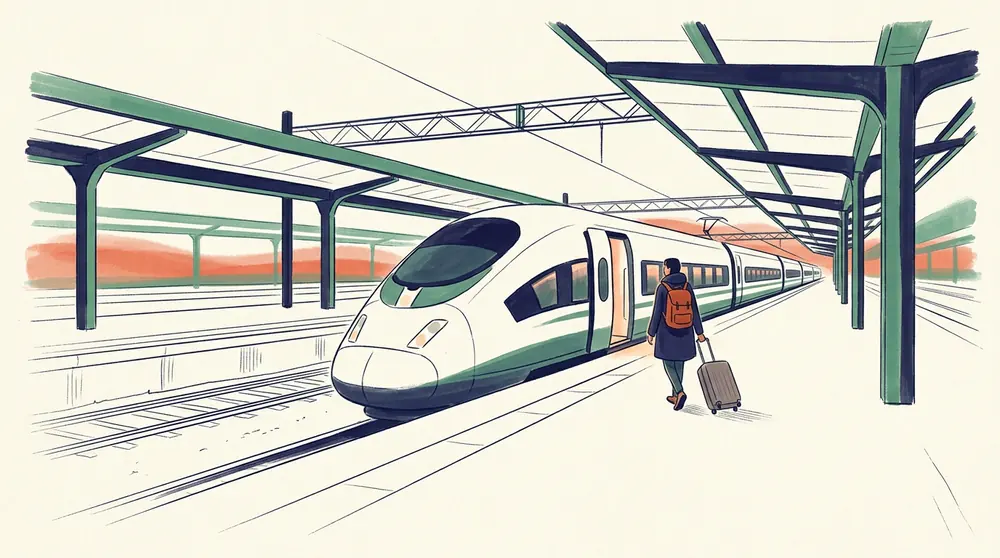
According to the 12306 ticket rules (MTR High Speed page) (checked November 2026), China's official rail platform sells tickets from 15 days in advance until 30 minutes before departure, with daily sales service running from 05:00 to 01:00 the next morning. Set calendar reminders for each leg so you can book as soon as your date opens.
The 12306 English website and app accept foreign passports once you activate an account and complete identity verification. Each account can store up to 19 passengers, and every passenger must pass real-name verification before boarding passes can be issued. Before your booking window opens, review the practical mechanics in these guides:
- China train tickets for foreigners
- Taking trains in China without a Chinese phone
- 12306 app English guide
- Trip.com train seat selection
At the station, bring your physical passport, which you use at the entry gates. Arrive early enough to clear passport control and baggage X-rays without rushing. Check the power bank rules for flights and trains so your battery is not confiscated at the gate.
Day-by-day plan
Day 1: Arrive in Beijing (night 1)
Use arrival day to sort out mobile data, airport transit and hotel check-in rather than scheduled sightseeing. Get a SIM or eSIM working before you leave the terminal, as payment apps and translation tools depend on an active connection. Compare options in our China SIM card guide for tourists and best eSIM for China, and work through the pre-departure checklist before leaving home.
Day 2: Forbidden City and the center (night 2)
Start early at the Forbidden City, entering through the Meridian Gate with the original passport used for your reservation. Under the rules on the Palace Museum online booking page (checked November 2026), tickets go on sale at 20:00 Beijing time seven days before the visit date, and the complex closes on Mondays except during public holidays. If Day 2 of your trip falls on a Monday, swap the Day 2 and Day 3 schedules so you visit the Great Wall on Monday and the palace on Tuesday.
Walk north through the palace courts and exit via the north gate directly across from Jingshan Park, then spend the afternoon exploring the surrounding alleyway neighborhoods on foot. For route ideas and context, see things to do in Beijing and the hutong walking tour.
Day 3: Great Wall (night 3)
Dedicate the entire day to one section of the Great Wall outside the city. Mutianyu is a practical choice for most visitors, offering real-name booking on its official website up to 15 days ahead, limited to one ticket per passport per day (checked November 2026). Weigh the transport options and terrain difficulty in our Great Wall sections comparison and the Mutianyu Great Wall directory entry.

Day 4: Temples, then train to Xi'an (night 4 in Xi'an)
Visit the Temple of Heaven in the morning when the park around the halls is most active. After lunch, head to Beijing West Station for a mid-day or afternoon high-speed G train to Xi'an North. Afternoon rail travel makes better use of daylight than an early morning departure, giving you a full half-day in Beijing and still putting you in Xi'an in time for dinner and an early night.
Day 5: Terracotta Army (night 5)
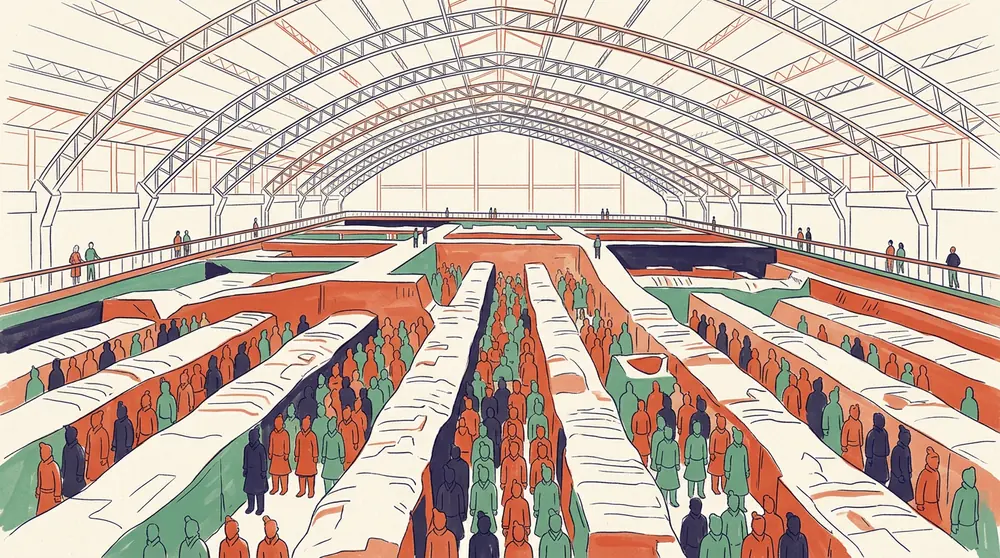
Allow most of the day for the round trip out to the museum and back into central Xi'an. According to the Qin Shi Huang Mausoleum Site Museum ticket page (checked November 2026), the standard adult ticket is ¥120 (about US$18) year-round in both low and high season, while full-time undergraduate or younger students pay ¥60; the ticket covers the excavation pits and Lishan Garden. Peak-season hours (16 March to 15 November) run from 8:30 to 17:00, and low-season hours (16 November to 15 March) run from 8:30 to 16:30.
All visitors, including foreign passport holders, must reserve a real-name timed ticket online in advance through the official museum website or the official WeChat accounts ("秦始皇帝陵博物院" or "兵马俑票务在线"). Arrive about half an hour before your reserved slot and bring your original physical passport for entry gate verification.
Day 6: Xi'an walls, then train to Shanghai (night 6 in Shanghai)
Spend the morning walking or cycling atop the Xi'an City Wall, then drop down into the nearby Muslim Quarter for lunch; our halal food guide explains what to look for in the market lanes. In the afternoon, board a high-speed G train from Xi'an North to Shanghai Hongqiao. Pick an early afternoon departure so the 6-to-8-hour ride reaches Shanghai before late evening. If you arrive late and plan to take the subway into town, check last-train cutoff times in advance; our Shanghai airport to city guide also explains transit from the Hongqiao hub into the center.
Day 7: Shanghai center (night 7)
Focus your first full day in Shanghai on the historic riverfront and central civic core: walk the Bund for views across the river, follow Nanjing Road inland toward People's Square, and factor in time for the Shanghai Museum. Use things to do in Shanghai, The Bund, and Shanghai Museum to sequence your stops.
Day 8: Old city and French Concession (night 8)
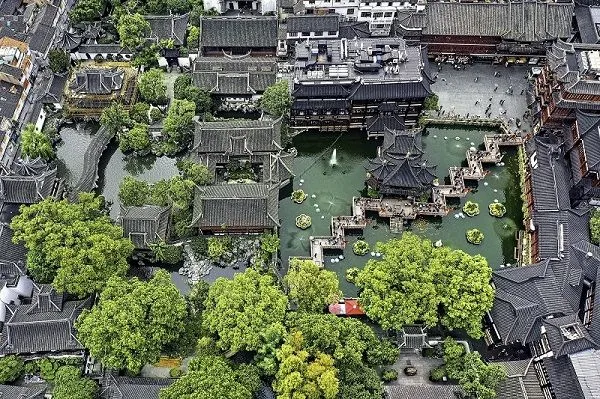
Pair two contrasting historic quarters. Start early at Yu Garden in the old city before tour groups fill the narrow bridges and pavilions, then spend the afternoon walking the tree-lined streets of the former French Concession at an unhurried pace. See Yu Garden and Wukang Road for orientation.
Day 9: Day trip (night 9)
Use your penultimate day for an excursion outside the metropolis, returning to your Shanghai hotel for the night so you do not have to repack:
- Suzhou: Best for travelers drawn to classical scholar gardens and canals; see the Suzhou day trip from Shanghai.
- Hangzhou: Suits visitors who want broad lake scenery, tea hills and temple walks; see the Hangzhou West Lake guide.
- Zhujiajiao: A lower-effort canal town reachable without booking intercity rail, fitting travelers who want a lighter half-day out.
Day 10: Fly out
Leave ample buffer time to reach either Pudong or Hongqiao airport, especially as Pudong sits much farther from central Shanghai. Double-check which airport appears on your ticket, keep your passport, boarding pass and any required departure forms accessible, and use the airport to city guide in reverse to choose between metro, maglev or taxi.
Cost estimate
The budget table below combines the daily spending estimates from China travel cost per day across 10 days with the published second-class fares for the two long-distance train legs. International flights and visa fees are excluded, and all figures remain approximate estimates rather than fixed quotes.
| Style | Daily tier (per person) | 10 days | Trains (2 legs, second class) | Total estimate |
|---|---|---|---|---|
| Budget | ¥250 to ¥400 (US$37 to $60) | ¥2,500 to ¥4,000 | about ¥1,140 to ¥1,250 | about ¥3,700 to ¥5,250 (US$550 to $785) |
| Mid-range | ¥500 to ¥900 (US$75 to $135) | ¥5,000 to ¥9,000 | about ¥1,140 to ¥1,250 | about ¥6,150 to ¥10,250 (US$920 to $1,530) |
On top of the daily food, local transit and lodging baseline, budget separately for major attraction entries: the Forbidden City (about ¥40 to ¥60), the Terracotta Army (¥120 for adults, ¥60 for eligible students) and your chosen section of the Great Wall. If you pick Suzhou or Hangzhou on Day 9, add a round-trip short-hop train ticket. Because exchange rates shift, check US dollar equivalents against live rates before you travel; the market rate stood at about 6.67 on 5 Nov 2026. Plug your own numbers into the CNY converter.
Booking timeline and order
Because Chinese trains and major monuments release tickets on strict short-notice countdowns rather than months ahead, booking in the wrong order causes unnecessary stress. Follow this sequence from earliest to latest:
- Visa and entry rules (months ahead): Run your nationality and route through the visa checker. Many passport holders qualify for visa-free entry, and travelers flying through a third country can check if they fit the rules in the 240-hour transit guide. Closer to departure, review how to complete the online arrival card.
- International flights (months ahead): Lock in an open-jaw ticket flying into Beijing and departing from Shanghai.
- Hotels (weeks to months ahead): Reserve refundable rooms near metro lines in all three cities so you have confirmed addresses for arrival paperwork and station transfers. Compare platforms in hotel booking apps for foreigners.
- Payment apps and 12306 verification (at least 3 weeks ahead): Set up mobile payments and verify your passport on 12306 before ticket windows open so a failed identity check does not cost you a seat release. Follow the Alipay setup guide.
- High-speed trains and Mutianyu Great Wall (15 days before each date): Both 12306 rail tickets and Mutianyu official admissions open 15 days in advance. Book your Day 3 Great Wall ticket and Day 4 Beijing-to-Xi'an train two weeks before those specific calendar dates, followed two days later by the Day 6 Xi'an-to-Shanghai train and your Terracotta Army reservation.
- Forbidden City (7 days before Day 2, at 20:00 Beijing time): Unless you leave home less than a week before Day 2, you will still be in your home country on the evening seven days prior to your visit: log in at 20:00 Beijing time that night to grab your slot rather than waiting until you land in China, when Day 2 tickets may already be gone.
Rules, opening hours and booking windows can change; check the official museum and rail pages once more right before your 15-day and 7-day countdowns begin.
Route swaps and adjustments
- Swap Xi'an for Chengdu: Travelers who care more about giant pandas and Sichuan cuisine than ancient burial pits can replace Days 4 to 6 with Chengdu. Read things to do in Chengdu and the panda base guide. Because Chengdu sits much farther southwest than Xi'an, the onward leg from Chengdu to Shanghai works better as a domestic flight than a train ride.
- Add Shenzhen or Hong Kong at the end: If your outbound flight leaves from the Pearl River Delta or you have extra days to tack on, extend south; see things to do in Shenzhen.
- Cut the trip to 7 days: If you only have a week, drop the Day 9 excursion and trim a full day from Shanghai, or compare the pacing in our 7-day honeymoon itinerary.
- Check holiday calendars and weather: Domestic travel spikes during national breaks, driving up hotel rates and making 15-day train releases much harder to win. Check your dates against major Chinese holidays and weigh seasonal weather trade-offs in best time to visit China.
FAQ
What is the best 10-day China itinerary for first-timers?
Beijing, Xi'an and Shanghai form the classic first-time route, combining imperial landmarks, the Terracotta Army and a modern riverfront skyline. Connecting them in one direction by high-speed train on an open-jaw flight ticket avoids wasted backtracking days.
How many nights should I spend in each city?
A 9-night split of 3 nights in Beijing, 2 in Xi'an and 4 in Shanghai gives enough time for the major sights and two afternoon train rides. If you prefer extra time for Beijing's temples and hutongs over a day trip from Shanghai, move one night from Shanghai to Beijing.
How much does a 10-day trip to China cost?
Expect roughly ¥3,700 to ¥5,250 (US$550 to $785) per person on a budget and ¥6,150 to ¥10,250 (US$920 to $1,530) for mid-range travel, including the two intercity train legs. These figures are estimates that exclude international flights, visas and individual attraction tickets.
Can I book high-speed trains from home?
You can book online from outside China, but 12306 releases tickets 15 days before departure until 30 minutes before the train leaves. Verify your passport on the 12306 English app ahead of time so you are ready when your 15-day window opens.
Is 10 days enough for China?
Ten days is enough to cover three major cities and one day trip near Shanghai without moving hotel every night, though it only scratches a fraction of the country. Save extra stops like Chengdu for a longer trip or swap one directly in place of Xi'an.
More guides like this
- Trip PlanningBeijing vs Shanghai: Which City Should You Visit? (2026)
- Trip Planning7-Day China Honeymoon Itinerary 2026: Day-by-Day Plan
- Trip PlanningChina 2 Week Itinerary: The Ultimate 14-Day Travel Plan (2026)
- Trip PlanningWhere to Stay in Beijing: Best Areas for Visitors 2026
- Trip PlanningWhere to Stay in Shanghai: Best Areas for Visitors 2026
- Trip PlanningBusiness Trip to China: First Timer Guide (2026)
Rules and apps in China change often. Spotted something out of date? Tell us at [email protected]. Published November 7, 2026.