China Trip Cost: Daily Budget and Sample Totals (2026)
A China trip costs about ¥250-400 a day on a budget and ¥500-900 mid-range. Daily tiers and 7 and 14-day totals in CNY and USD at 6.7, as estimates.
Updated 14 min readCSK Team
On this page10 sections
- Daily Budget Tiers at a Glance
- Backpacker Budget: ¥250-400 ($37-60) per Day
- Mid-Range Budget: ¥500-900 ($75-135) per Day
- Comfortable Budget: ¥1,000-2,000 ($150-300) per Day
- Luxury Travel: ¥2,500+ ($370+) per Day
- The Big Fixed Costs: Sights and Intercity Transit
- Pre-Trip and On-the-Ground Extras
- How to Trim Your Spend Without Ruining the Trip
- Sample Trip Totals: 1 Week and 2 Weeks
- FAQ
Quick answer: A China trip costs roughly ¥250-400 (US$37-60) per person per day on a backpacker budget, ¥500-900 (US$75-135) mid-range and ¥1,000-2,000 (US$150-300) comfortable, excluding international flights. A 7-day mid-range trip totals about ¥4,300-7,800 (US$640-1,165). All figures are estimates at ¥6.7 per US$1, last reviewed 5 Nov 2026.
Money goes further in China than in most of Western Europe and the US, particularly on hotels, local food and city transit. Where a budget stretches or snaps depends on three things: whether you split a hotel room, how many long-distance high-speed trains you stack into a single week, and how heavily your itinerary leans on major ticketed sights.
All figures below are estimates compiled from published ranges and traveler reports rather than a formal price survey. Because hotel and rail fares move with the season and booking date, treat these numbers as planning baselines rather than fixed tariffs. You can convert any figure with our CNY converter, or look at long-term expenses in our cost of living in China breakdown.
Exchange rate used: US$1 = ¥6.7. The market rate sat at about 6.67 on 5 Nov 2026. A year earlier it was about 7.12, which is why older budget breakdowns show higher dollar totals for the exact same yuan prices.
Daily Budget Tiers at a Glance
| Travel Style | Daily Budget (CNY) | Daily Budget (USD) |
|---|---|---|
| Backpacker | ¥250-400 | $37-60 |
| Mid-range | ¥500-900 | $75-135 |
| Comfortable | ¥1,000-2,000 | $150-300 |
| Luxury | ¥2,500+ | $370+ |
These daily estimates are per person and assume two travelers sharing a standard room. Solo travelers wanting a private room rather than a hostel bunk should add the second half of the room rate to their daily figure. International flights, visa fees and intercity rail legs sit outside the daily tiers and are calculated separately below so a train-heavy route does not distort your day-to-day spending target.
Daily costs in Shanghai, Beijing and Shenzhen also run higher than in second-tier hubs such as Chengdu, Kunming or Guilin.
Backpacker Budget: ¥250-400 ($37-60) per Day
Keeping daily spending under ¥400 works smoothly in China if you rely on the metro, eat where locals eat, and pace your paid sightseeing. The trade-off at this tier is time and privacy, not safety or basic hygiene.
Accommodation: ¥80-120 per night
- Hostel dorm: ¥50-80 ($7-12)
- Budget hotel (twin share): ¥100-150 ($15-22), working out to ¥50-75 per person
- Guesthouse: ¥80-120 ($12-18)
Hostels operate across all standard tourist cities and can be booked through Booking.com and Hostelworld. If you are traveling as a pair, splitting a twin room in a basic local hotel often costs the same per person as two dorm beds while giving you a private door.
Food: ¥90-100 per day
- Breakfast: ¥8-15 from street stalls or convenience stores
- Lunch: ¥15-30 for a bowl of noodles or a rice dish at a neighborhood shop
- Dinner: ¥25-40 at a casual local restaurant
- Snacks and drinks: ¥10-20
Street food and neighborhood noodle shops are cheap, filling and cooked to order. The easiest way to blow a tight food budget is sitting down at restaurants immediately outside major ticket gates or in tourist pedestrian streets. University cafeterias and the streets surrounding campus gates are reliable spots for cheap, decent meals. Cooking occasionally in a hostel kitchen trims costs further, though local street breakfast is so inexpensive that self-catering barely saves money in the morning.
Local Transportation: ¥30-80 per day
- Metro: ¥3-8 per ride
- City bus: ¥1-2 per ride
- Occasional taxi: ¥20-40
Stick to subways and buses. Public transit in Chinese cities is efficient and inexpensive, whereas two or three casual taxi rides will double your daily transport spend. Downloading offline maps before you set out keeps you from burning mobile data while finding bus stops and metro exits.
Activities: ¥50-100 per day
- City parks: Many are free
- Temple entry: ¥10-30
- Museums: Often free, or ¥10-30
- Major attractions: ¥40-150 when averaged across the trip
Because big-name national parks and historical sites charge steep entry fees, backpackers usually balance one headline ticket with a day or two of free public parks, museum visits and neighborhood walking. If you hold an ISIC card, carry it; ask whether student discounts apply.
Mid-Range Budget: ¥500-900 ($75-135) per Day
Moving into the mid-range tier buys private comfort and saves time. You move from dorms to private rooms with air conditioning, swap slow buses for ride-hailing when your feet hurt, and cover major sights without rationing tickets.
Accommodation: ¥250-500 per night
- 3-star hotel: ¥200-400 ($30-60), or ¥100-200 per person when shared
- Nice serviced apartment or private rental: ¥300-500 ($45-75)
- Boutique hotel: ¥400-600 ($60-90)
At this price point you get a private bathroom, air conditioning, a decent location near transit, and sometimes breakfast included. Booking a room that includes breakfast is an easy win if you want coffee and a sit-down meal before sightseeing without hunting for an open café.
Food: ¥150-250 per day
- Breakfast: ¥20-40 at a hotel or café
- Lunch: ¥40-70 at a sit-down restaurant
- Dinner: ¥60-100 at a good restaurant, allowing for one nice meal a day
- Drinks and snacks: ¥20-40
This budget gives you enough room to order regional specialties, sit in comfortable restaurants, and mix in occasional Western food or café stops when you want a break from noodles.
Local Transportation: ¥80-200 per day
- Metro and bus: ¥30-50
- Taxi or Didi: ¥50-100
- Intercity high-speed train: Budgeted separately per leg
The practical move at the mid-range level is using the metro for long cross-town hops during rush hour and calling a Didi (China's ride-hailing app) for short trips, late nights or station transfers with luggage. Using Didi is generally cheaper than flagging street taxis and avoids meter disputes. In cities that offer them, multi-day metro passes can simplify heavy sightseeing days.
Activities: ¥100-200 per day
- All primary city attractions
- Audio guides or group tours at historical sites
- Occasional evening shows or cultural experiences
- One or two big-ticket parks or cableways per city
Comfortable Budget: ¥1,000-2,000 ($150-300) per Day
The comfortable tier removes most of the friction foreigners run into on the ground. The primary upgrade here is language support, central locations, and door-to-door transport.
Accommodation: ¥600-1,200 per night
- 4-star hotel: ¥500-900 ($75-135), or ¥250-450 per person shared
- International chains: ¥600-1,200
- Boutique luxury: ¥800-1,500
Staying at international chains or higher-end boutique properties gets you reliable service, prime locations and front-desk staff who speak English. That staff support matters when you need help confirming a local booking or arranging transport.
Food: ¥300-500 per day
- Breakfast: Included with the hotel, or ¥50-80 at a café
- Lunch: ¥80-150 at good restaurants
- Dinner: ¥150-250 for memorable meals and signature regional cuisines
- Drinks and wine: ¥50-100
You can eat at recommended dining rooms, order signature dishes such as Peking duck or high-end regional banquets, and add wine or cocktails without watching the bill.
Local Transportation: ¥150-400 per day
- Frequent taxis: ¥100-200
- Occasional private transfers: ¥200-400 (useful for airports or rural wall sections)
- First-class rail: A comfortable premium over second-class seats on intercity days
Activities: ¥200-400 per day
- Full access to major attractions and add-on cable cars
- Private English-speaking guides for complex historical sites
- Special workshops such as cooking classes
- Evening shows and performances
Booking packages through Trip.com and hiring private guides for sprawling sites like the Forbidden City or Terracotta Warriors turns a confusing crowd experience into a clear historical walk.
Luxury Travel: ¥2,500+ ($370+) per Day
- 5-star hotels: ¥1,500-5,000 per night
- Fine dining: ¥500-1,500 per meal
- Private guided tours: ¥1,000-3,000 per day
- Private cars with driver: ¥800-2,000 per day
- Domestic flights: First class
In Shanghai, Beijing and Shenzhen, five-star rooms and fine dining approach the rates of major Western capitals, whereas the same tier costs noticeably less in hubs like Chengdu, Kunming or Guilin. Because luxury rates swing wildly by date and convention calendar, compare quotes directly on a booking app for your exact travel window.
The Big Fixed Costs: Sights and Intercity Transit
Daily food and metro rides rarely break a China budget. The expenses that catch travelers off guard are entry tickets to headline sights and long-distance transport between cities.
Major Attraction Tickets
China's famous monuments and national parks charge substantial entry fees, and mountainous parks often bundle or add shuttle buses. The adult prices below are approximate peak-season figures from official booking pages and traveler reports. Because seasonal pricing and ticket rules change, verify current tariffs and time-slot rules on the official booking page before your visit.
| Attraction | Cost (CNY) | Cost (USD) |
|---|---|---|
| Forbidden City | about ¥60 (peak season) | about $9 |
| Great Wall at Mutianyu | about ¥40-45 | about $6-7 |
| Terracotta Warriors | about ¥120 (same price all year) | about $18 |
| Zhangjiajie National Forest Park, 4-day pass | ¥240 (2026 official notice) | $36 |
| Tianmen Mountain, 1 day | ¥288 (2026 official notice) | $43 |
A realistic rule of thumb is to set aside ¥300-500 ($45-75) per major city for entry tickets, averaged across your route. Notice the gulf between urban historical monuments and nature parks: the Forbidden City is about ¥60, whereas the Zhangjiajie National Forest Park 4-day pass with eco-bus is ¥240 (checked November 2026) and nearby Tianmen Mountain is ¥288 for a single day. For details on how the park passes work, read our Avatar mountains guide.
Price is only half the issue; availability is the other. Major sites lock down inventory days in advance. For example, Palace Museum booking (the Forbidden City) does not sell same-day tickets at the gate and opens reservations 7 days ahead at 20:00 (checked November 2026). Online advance booking is required at the Palace Museum and is sometimes cheaper elsewhere. For step-by-step passport registration rules, see our attraction ticket guide.
Intercity Trains and Domestic Flights
High-speed trains (G trains) are the backbone of most China itineraries. While short regional hops cost under ¥100, medium and long intercity journeys often run ¥200-600 or more per ticket depending on distance and train speed.
The table below lists approximate G-train fares reported by travelers. Because rail fares on busy corridors can vary by train number and date, check 12306 or Trip.com for exact pricing on your travel date, and see our train ticket guide for foreigners for how passport verification works.
| Route | Second Class | First Class |
|---|---|---|
| Beijing-Shanghai | about ¥662 ($99) | about ¥1,060 ($158) |
| Beijing-Xi'an | about ¥515 ($77) | about ¥824 ($123) |
| Shanghai-Hangzhou | about ¥73 ($11) | about ¥117 ($17) |
| Guangzhou-Shenzhen | about ¥75 ($11) | about ¥100 ($15) |
When planning routes over 1,000 kilometers, compare high-speed rail against domestic flights booked in advance:
- Short-haul flights: ¥300-800 ($45-120) est.
- Long-haul flights: ¥800-1,500 ($120-225) est.
Budget airlines such as Spring Airlines also fly domestic routes; watch baggage allowances and longer airport transfers. Compare carriers in our domestic airlines comparison. If you are on a strict backpacker budget, booking slower K or T series overnight trains saves both the high-speed rail premium and a night's hotel bill.
Pre-Trip and On-the-Ground Extras
Before locking in your total, factor in five expenses that sit outside daily food and lodging:
- Visa fees: Do not pay for a visa before checking whether you actually need one. Many nationalities qualify for 30-day visa-free entry or the 240-hour transit without visa rule. Check your passport against our visa checker and the 30-day visa-free countries list. Note that the USA is not on the 30-day visa-free list. If you do require a visa, fees vary by nationality and must be confirmed with your local Chinese embassy or visa center.
- Payment app fees (the ¥200 threshold): Foreign bank cards linked to Alipay and WeChat Pay work well for daily spending, and neither platform charges a transaction fee on payments of ¥200 or less. Above ¥200, however, a 3% fee applies to the entire payment amount according to platform wording (check the in-app help page for current terms). To avoid losing 3% on large bills, ask to split purchases where possible, book major hotels online in advance, or carry backup cash for items over ¥200. See our breakdown of Alipay vs WeChat Pay.
- Mobile data (SIM or eSIM): Plan on roughly ¥100-300 ($15-45) for a 2-to-4-week tourist SIM or eSIM depending on your data allowance, which is almost always cheaper than home-carrier international roaming. Compare options in our eSIM setup guide and SIM vs eSIM guide.
- Travel insurance: A two-week policy runs roughly US$30-100 as an estimate, depending on your age and coverage limits. See our China travel insurance notes.
- Tips and incidentals: Tipping is not standard in restaurants or taxis, but private tour guides typically expect ¥50-200 per day. Leave a buffer for temple donations, unexpected late-night taxis and shopping.
How to Trim Your Spend Without Ruining the Trip
Cutting costs in China is mostly about booking timing and choosing where to compromise:
- Decide location vs. room rate: In cities with dense metro networks like Shanghai and Beijing, staying a few metro stops outside the city center can lower hotel prices for a metro fare of ¥3-8. Compare local deals on Chinese booking platforms like Ctrip/Trip.com, and book popular cities well in advance.
- Shift your big meal to midday: Many sit-down restaurants offer lunch specials that cost less than ordering the same dishes at dinner.
- Cut paid shows, keep core sights: Live evening performances and tourist shows often cost more than a full day of historic monuments. Unless a performance comes strongly recommended for your specific interests, skip it and spend the afternoon in free city parks and historic neighborhoods instead.
Sample Trip Totals: 1 Week and 2 Weeks
The tables below show how daily tiers combine with intercity transport over 7 and 14 days. All figures are per-person estimates at ¥6.7 per US$1 and exclude international airfare, visa fees, travel insurance and shopping.
7-Day Trip Totals (Per Person)
This one-week estimate combines 7 days of on-the-ground spending with intercity transport equivalent to one or two high-speed train legs or a short domestic flight.
| Style | Daily costs x 7 | Intercity transport | Total (CNY) | Total (USD at 6.7) |
|---|---|---|---|---|
| Budget | ¥1,750-2,800 | ¥500-900 | ¥2,250-3,700 | $335-550 |
| Mid-range | ¥3,500-6,300 | ¥800-1,500 | ¥4,300-7,800 | $640-1,165 |
| Comfortable | ¥7,000-14,000 | ¥1,500-3,000 | ¥8,500-17,000 | $1,270-2,540 |
14-Day Trip Totals (Per Person)
For a standard two-week circuit covering multiple cities, costs break down across the four core categories as follows:
Budget backpacker: ¥5,100 (~$760)
- 14 nights accommodation: ¥1,400
- Food (14 days): ¥1,200
- Transportation (including intercity trains): ¥1,500
- Activities: ¥1,000
Mid-range traveler: ¥12,300 (~$1,835)
- 14 nights accommodation: ¥5,000
- Food (14 days): ¥2,800
- Transportation: ¥2,500
- Activities: ¥2,000
Comfortable traveler: ¥23,000 (~$3,435)
- 14 nights accommodation: ¥10,000
- Food (14 days): ¥5,000
- Transportation: ¥4,000
- Activities: ¥4,000
Notice that on a two-week backpacker route, transportation (¥1,500) actually exceeds your entire 14-day accommodation bill (¥1,400) if you cover long distances by rail. If you want to match these numbers to a concrete route, pair them with our 2-week China itinerary and our budget travel guide.
Finally, check the calendar before booking. Hotel rates and flight prices climb sharply around major domestic breaks, particularly Spring Festival, Labor Day and October Golden Week. Check our China public holidays 2027 calendar and the best time to visit China to steer clear of peak domestic surge pricing.
FAQ
How much does a trip to China cost?
A 7-day trip costs roughly ¥2,250-3,700 (US$335-550) per person on a budget, ¥4,300-7,800 (US$640-1,165) mid-range, and ¥8,500-17,000 (US$1,270-2,540) at a comfortable level, excluding international flights. Over two weeks, expect around ¥5,100 (~US$760) on a backpacker budget, ¥12,300 (~US$1,835) mid-range, and ¥23,000 (~US$3,435) comfortable. All figures are estimates calculated at ¥6.7 per US$1.
How much money do I need per day in China?
Plan on ¥250-400 (US$37-60) per person per day on a backpacker budget, ¥500-900 (US$75-135) for mid-range travel, and ¥1,000-2,000 (US$150-300) for comfortable 4-star travel, assuming two people share a room. Intercity trains and domestic flights should be budgeted on top of your daily tier.
Is China expensive for tourists?
No, day-to-day costs for hotels, local meals and subways are lower than in most of Western Europe and the US, especially once you leave Shanghai, Beijing and Shenzhen. The largest expenses for tourists are intercity high-speed trains and entry tickets to major attractions.
Can I pay by card in China?
Yes, most travelers pay by linking a foreign Visa or Mastercard to Alipay or WeChat Pay before arrival. Neither app charges a fee on single transactions of ¥200 or less, while payments above ¥200 carry a 3% fee on the full amount, so it pays to carry some yuan cash as a backup and for larger bills.
What is the cheapest time to travel to China?
The lowest prices generally run from December to early February (excluding the Spring Festival rush) and in the weeks immediately following major holidays. Avoid Spring Festival, Labor Day and October Golden Week, when domestic travel demand pushes hotel and transport prices to their yearly highs.
Need currency conversion on the go? The China Survival Kit includes a live currency converter, budget tracker, and cost guides for major cities.
Essential Apps for This Guide
All 19 apps →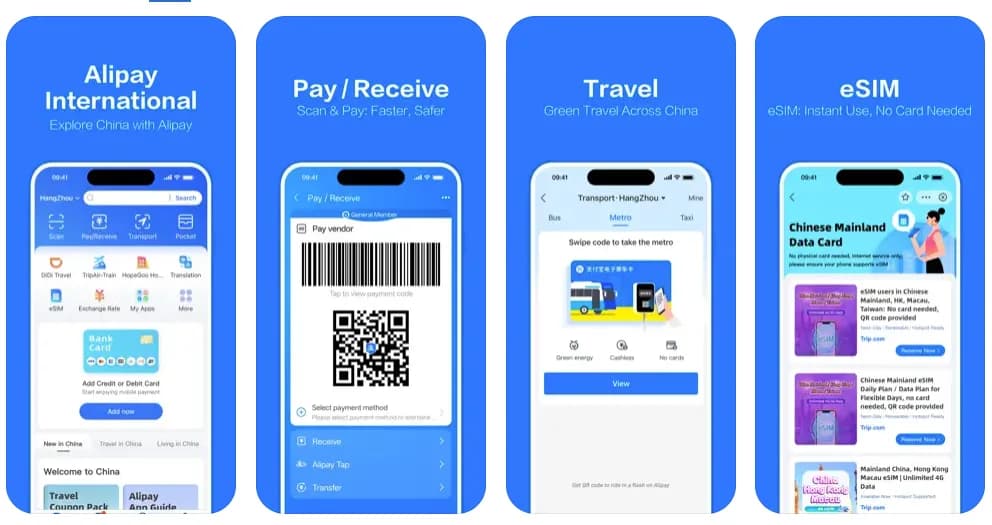


More guides like this
- Money & PaymentsChina Honeymoon Cost Breakdown 2026: Budget to Luxury
- Money & PaymentsCost of Living in China: Monthly Budget by City (2026)
- Money & PaymentsChina on a Budget: How to Travel Cheaply Without Missing Out
- Money & PaymentsAlipay Setup for Foreigners: Link a Foreign Card in 2026
- Money & PaymentsTipping in China: Don't Do It — Here's Why (2026 Guide)
- Money & PaymentsATMs in China With Foreign Cards: Banks, Fees and Limits
Rules and apps in China change often. Guides are checked against official sources — see our editorial & verification standards. Spotted something out of date? Tell us at [email protected]. Published December 8, 2025.