China vs Hong Kong: Key Differences for Travelers (2026)
China vs Hong Kong for travelers: Hong Kong has its own entry rules, money, internet and plugs. Compare visa, apps, driving side and border crossing.
Updated 11 min readCSK Team
On this page9 sections
Quick answer: Hong Kong and mainland China are separate for travelers. Each has its own immigration and visa rules, currency (HKD vs CNY), and payment habits. Hong Kong has an open internet, left-side driving and Type G plugs. Mainland blocks Google and similar services, drives on the right and uses Types A, C and I plugs. Crossing between them means passing border immigration and customs.
Hong Kong is part of China, yet it operates under "One Country, Two Systems." Politically they share a sovereign, while practically they run as separate jurisdictions with a hard border between them. Packing for Hong Kong as if it were the mainland creates unnecessary prep, while crossing into Shenzhen expecting your Hong Kong routine to carry over can leave you without working maps, messaging apps or payment cards within minutes of clearing the border hall. Plan for them as two distinct stops.
At a Glance: How the Systems Differ
| Factor | Hong Kong | Mainland China |
|---|---|---|
| Visa | Visa-free for about 170 countries and territories, 7 to 180 days | Visa, or one of the visa-free schemes below |
| Internet | Unrestricted | Blocked (VPN needed) |
| Language | Cantonese + English | Mandarin |
| Currency | HKD | CNY/RMB |
| Payment | Cards widely accepted | Alipay/WeChat Pay dominant |
| Google/Facebook | Works | Blocked |
| Driving | Left side | Right side |
| Plugs | UK-style (Type G), 220V | Types A, C and I, 220V |
Entry and Visa Rules
An entry stamp in Hong Kong does not cover a day trip across the river into Shenzhen. When you take the metro or high-speed train north from Hong Kong, you exit Hong Kong immigration and apply for entry into mainland China just as you would on an international flight.
Entering Hong Kong
According to HK Immigration Department: Visit/Transit rules (checked November 2026), nationals of about 170 countries and territories may visit Hong Kong without a visa or entry permit for stays of 7 to 180 days, depending on passport. Most Western nationalities simply show up with a passport valid for the trip, though you should confirm the exact stay limit for your nationality on the Immigration Department page before booking flights.
Entering Mainland China
Mainland China requires a visa obtained before travel unless your passport and route fit one of its exemptions (policy checked 5 Nov 2026):
- 30-day unilateral visa-free entry: Covers 50 countries, running to 31 Dec 2026 for 48 of them (and to 31 Dec 2027 for Russia). The UK and Canada joined the list on 17 Feb 2026. The USA is not on this list. As of 5 Nov 2026, no 2027 extension had been announced, so anyone traveling near or after the end of the year must check whether the scheme has been renewed.
- 240-hour visa-free transit: Covers 57 countries since 20 Aug 2026 and requires an onward ticket to a third country or region. Because Hong Kong and Macao count as separate immigration regions, London to Shanghai to Hong Kong qualifies as a valid transit, whereas Hong Kong to Shenzhen and back to Hong Kong does not. Read the 240-hour transit guide to avoid routing errors.
- Hainan 30-day visa-free entry: Covers 61 countries for stays limited to Hainan province.
- Standard visa: If none of these apply, apply for a Chinese visa in advance, which takes supporting documents and several working days.
Use the visa checker and the 30-day visa-free list to check your passport. Decide your mainland entry method before locking in hotels, because changing a return ticket into a three-region transit loop is much cheaper before you fly.
Internet, Apps and the Border Cut-Off
In Hong Kong, Gmail, Google Maps, Instagram, WhatsApp, Telegram, YouTube and Netflix load normally on airport Wi-Fi without a VPN. Mainland China's Great Firewall blocks those Google, Meta and messaging services on standard local connections, and Netflix is not offered in mainland China at all.
The trap is the land or rail border transition. If you cross on a local SIM without a working VPN or roaming plan, your usual apps stop the moment your phone switches to a mainland network. Because VPN websites and app stores are also blocked on the mainland, set up and test your VPN on every device, or arrange an eSIM or roaming data plan, while still in Hong Kong or at home. Check affected sites with the firewall checker.
Money, Cards and Daily Payment
Hong Kong runs on cards, cash and its local stored-value card; mainland China runs almost entirely on QR-code apps linked to bank cards.
| Topic | Hong Kong | Mainland China |
|---|---|---|
| Currency | HKD (about 7.8 per US$) | CNY, about 6.7 per US$ (5 Nov 2026), so ¥100 is about US$15 |
| Foreign cards | Visa and Mastercard widely accepted | Alipay and WeChat Pay accept foreign cards; fee waived at ¥200 or less per payment, 3% above |
| WeChat Pay limits | n/a | ¥6,500 per payment, ¥50,000 per month, ¥65,000 per year on international cards (WeChat help) |
| ATMs | Common, English menus | ¥3,000 per withdrawal at many ATMs (Shanghai government guide) |
| Transit | Octopus card | Alipay, WeChat or city transit QR codes |
Paying in Hong Kong
In Hong Kong (HKD), cards and Apple Pay work across restaurants, shops and hotels. Cash remains common at small food stalls and in metered taxis. The Octopus card covers public transport, MTR, buses and ferries, plus convenience stores. Local Hong Kong versions of Alipay and WeChat Pay exist, but foreign visitors do not need them.
Paying in Mainland China
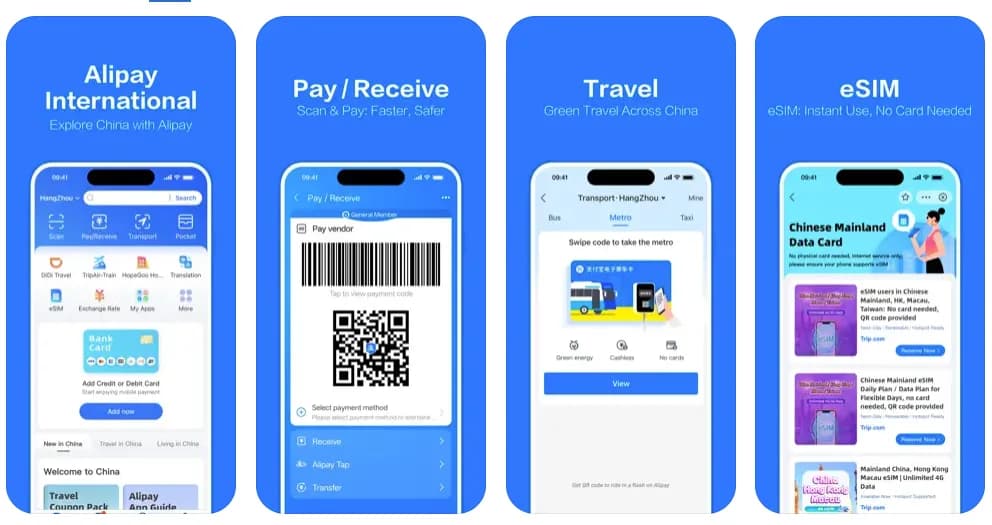
In mainland China (CNY, also written RMB), international credit cards work mostly at international hotels and big chains, and Apple Pay has very limited acceptance, so you cannot rely on either for daily spending. Many shops, restaurants and street stalls take only Alipay or WeChat Pay. Cash is less common and some places refuse it in practice, though you should still carry a small backup stash of banknotes in case a phone battery dies or a terminal fails.
Link your Visa or Mastercard to Alipay and WeChat Pay before crossing the border, while you can easily receive SMS verification codes and reach your home bank's app. Both apps waive their transaction fee on single payments of ¥200 or less (WeChat's own wording is under ¥200) and charge about 3% above that, keeping metro rides, snacks and casual meals fee-free, while a direct card swipe at a big hotel may avoid the 3% surcharge on larger bills. WeChat Pay linked to an international card does not support red packets or peer-to-peer transfers, so you cannot split a bill in-app or pay a vendor using a personal transfer code rather than a merchant code.
See our Alipay setup, can I use a debit card in China, currency exchange tips and the CNY converter.
Language, Culture and Dining
Shaped by Cantonese roots and British colonial administration, Hong Kong uses Cantonese (广东话) as its primary spoken language and English as an official language on road signs, metro announcements, menus and government services. Most service staff speak functional English, and Western business customs are standard. Many residents understand Mandarin, though locals do not prefer it; speaking English is easier and more welcome if you do not speak Cantonese. Dining centers on Cantonese cuisine, dim sum and international restaurants, with familiar table customs and occasional expectations of tipping.
Mainland China has strong regional variations, Sichuan, Hunan and Dongbei cuisines differ sharply from Cantonese cooking, and tipping is not practiced. Mandarin (普通话) is the primary language everywhere. Because spoken Cantonese and Mandarin are not mutually intelligible, a phrasebook for one will not work for the other. Outside major tourist hubs and hotel front desks, spoken English is limited and signs or menus are often in Chinese only, making a camera translation app essential on the mainland.
Getting Around, Driving and Plugs
- Public transit and taxis: At mainland metro turnstiles, scan a transit QR code in Alipay or WeChat. Hong Kong taxis take cash or Octopus and Uber works normally; on the mainland, Uber does not exist, so use the DiDi app (standalone or inside Alipay and WeChat) to hail cars without explaining destinations in Mandarin.
- Driving: Foreign visitors cannot rent and drive freely in mainland China using only a home driving licence or an International Driving Permit. See the international driving permit guide for why most short-term visitors stick to high-speed trains, metros and DiDi.
- Plugs: Both run on 220V, but sockets differ. Hong Kong uses three-rectangular-pin Type G sockets; the mainland uses Types A (two flat pins), C (two round pins) and I (three flat pins in a V-shape), though many mainland hotels install multi-standard outlets. Carry a universal adapter if visiting both, and check the China power adapter tool and hotel outlet guide.
Crossing the Border Between Hong Kong and the Mainland
Hong Kong borders Shenzhen directly and links to the Pearl River Delta by rail, bridge and sea.
Ways to Cross and Short Trips
- By train: The MTR East Rail Line reaches the land checkpoints at Lo Wu or Lok Ma Chau Spur Line, connecting directly into the Shenzhen metro, popular for cheaper shopping, electronics and tech markets, theme parks and regional food (see Hong Kong to Shenzhen). For faster city-center travel, the Express Rail Link runs high-speed trains from Hong Kong West Kowloon Station to Shenzhen and Guangzhou, where both Hong Kong exit and mainland entry immigration happen inside West Kowloon Station before boarding. Guangzhou is about 1 hour away and serves as the historical heart of the region, the origin of traditional Cantonese cuisine, and a major trading hub with a noticeably different pace from Hong Kong.
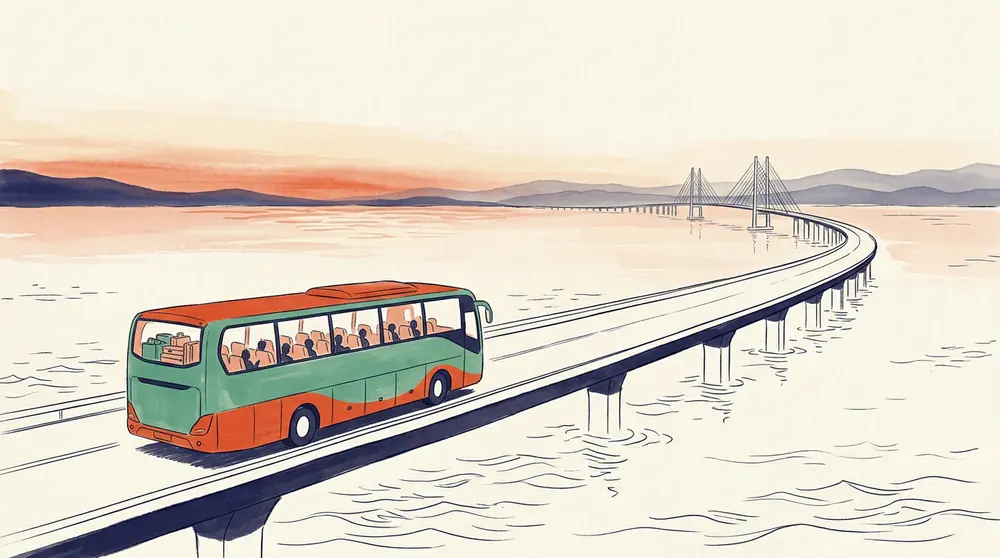
- By bus: Cross-border buses serve Shenzhen, Guangzhou and other cities. Heading west toward Zhuhai or Macao across the Hong Kong-Zhuhai-Macao Bridge (HZMB), the HK Transport Department: HZMB Hong Kong Port access page (checked November 2026) lists 24-hour shuttle buses for either route at HK$65 in the daytime (6:00 am to 11:59 pm) and HK$70 at night (midnight to 5:59 am), with concession fares of HK$33 by day and HK$35 at night for children under 12 or under 1.2 m, eligible disabled persons and seniors aged 65 or over.
- By ferry: Ferries link Hong Kong terminals to mainland ports and Macao.
Control Point Hours and Queues
According to HK Immigration Department: control point hours (checked November 2026), operating hours vary:
- 24-hour crossings: Huanggang (land), Hong Kong-Zhuhai-Macao Bridge, and Macao Ferry Terminal.
- Rail and MTR crossings: Lo Wu (6:30 am to midnight), Lok Ma Chau Spur Line (6:30 am to 10:30 pm), and Express Rail Link West Kowloon (6:30 am to 11:30 pm).
- Other land and sea crossings: Shenzhen Bay passenger building (6:30 am to midnight), China Ferry Terminal (7:00 am to midnight), and Heung Yuen Wai and Man Kam To (7:00 am to 10:00 pm). Sha Tau Kok passenger clearance is suspended until further notice.
The Immigration Department notes that Lo Wu, Lok Ma Chau Spur Line, Shenzhen Bay and West Kowloon experience longer clearance waits during peak hours, peak travel seasons, public holidays and weekends. Confirm current hours and transport schedules on the operator's or department's page before late-night travel.
At the Checkpoint
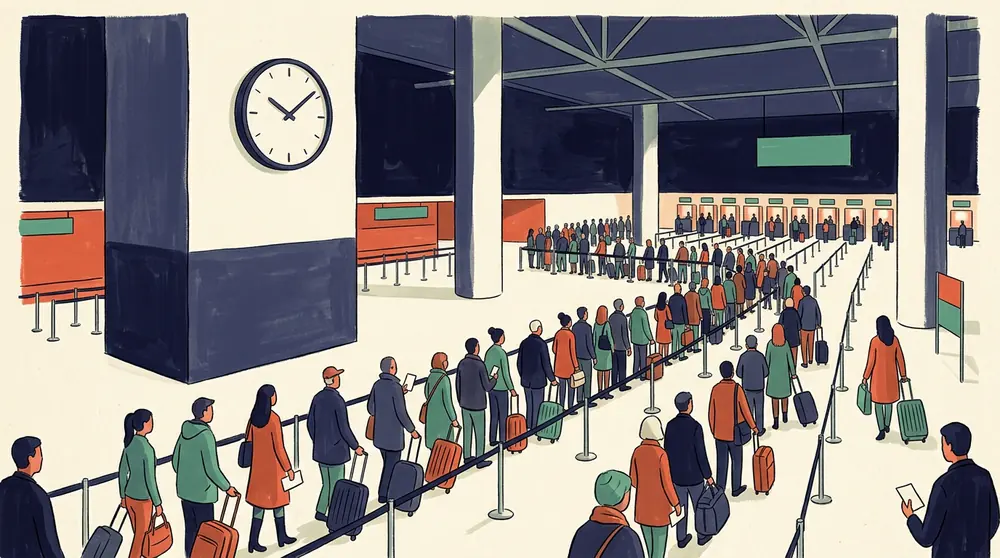
At land or ferry crossings, you clear Hong Kong exit control, walk the connecting corridor, and queue for mainland entry immigration and customs:
- Mainland arrival card: Foreign visitors can file the free Online Arrival Card ahead of time at s.nia.gov.cn, in the NIA 12367 app, or via WeChat or Alipay mini programs. The National Immigration Administration warns travelers against fake lookalike sites that charge fees. Paper cards and self-service kiosks remain available at the border hall. See the online arrival card guide.
- Customs allowances: Duty-free allowances when entering the mainland from Hong Kong or Macao are half the normal international allowance, with even lower limits for frequent crossers entering more than once in 15 days. See the customs arrival guide.
Which Should You Visit, and in What Order?
Pick Hong Kong alone if you have 2 to 4 days, want minimal digital prep, need uninterrupted access to Western work tools, or want a first trip to Asia with English signage and tap-to-pay convenience.
Pick mainland China if you have a week or more, want landmarks like the Great Wall and regional Chinese cultures, are on a tighter daily budget, and do not mind setting up apps in advance.
Combine both if you have 10 or more days. First-time visitors often fly into Hong Kong for 2 or 3 days to adjust to the time zone and test mainland apps in a low-stakes setting before heading north into Shenzhen or Guangzhou. Or tackle the mainland first while your energy is high and finish in Hong Kong to unwind before flying home.
Planning to visit both? The China Survival Kit covers mainland China essentials, pair it with standard Hong Kong travel prep for complete coverage.
FAQ
What is the difference between China and Hong Kong for tourists?
They have separate immigration and visa systems, currencies, payment habits and internet access. Hong Kong uses HKD and has an open internet; mainland China uses CNY and blocks Google and similar services.
Do I need a visa for Hong Kong and mainland China?
Hong Kong is visa-free for about 170 countries and territories for 7 to 180 days, while mainland China requires a visa unless you qualify for a scheme such as 30-day unilateral entry or 240-hour transit. Entry to Hong Kong never grants entry to the mainland. Check your passport on the visa checker.
Do Google and WhatsApp work in Hong Kong?
Yes, Hong Kong has an unrestricted internet where Google, Gmail, WhatsApp and social media work normally. In mainland China those services are blocked, so install and test a VPN or roaming plan before you cross the border.
Which side do they drive on in China and Hong Kong?
Hong Kong drives on the left. Mainland China drives on the right.
Can I use the same plug in Hong Kong and mainland China?
Not always. Hong Kong uses UK-style Type G sockets, while mainland China uses Types A, C and I. Carry a universal adapter if visiting both and check the power adapter tool.
Can I use Octopus or HKD in mainland China?
No, mainland China uses CNY, paid mostly through Alipay or WeChat Pay. The Octopus card and Hong Kong dollars are for Hong Kong transit and daily spending.
Essential Apps for This Guide
All 19 apps →
More guides like this
- DestinationsAvenue of Stars Hong Kong: Complete 2026 Visitor Guide
- DestinationsHong Kong Palace Museum: Tickets, Hours & Visitor Guide (2026)
- DestinationsHong Kong to Shenzhen Day Trip: Food & Border Tips (2026)
- DestinationsHong Kong to Shenzhen Day Trip 2026: Ultimate Shopping Guide
- DestinationsGolden Whip Stream Zhangjiajie: Complete Hiking Guide (2026)
- DestinationsGuanque Tower (Stork Tower) Guide: Shanxi Landmark (2026)
Rules and apps in China change often. Guides are checked against official sources — see our editorial & verification standards. Spotted something out of date? Tell us at [email protected]. Published December 8, 2025.