Avatar Mountains China: Zhangjiajie Visitor Guide
The Avatar mountains are in Zhangjiajie National Forest Park, Hunan. 2026 ticket ¥240 for 4 days, how to get there, route, cable cars and best season.
Updated 11 min readCSK Team
On this page9 sections
Quick answer: The Avatar mountains in China are the sandstone pillars of Zhangjiajie National Forest Park in Hunan, part of the Wulingyuan scenic area. The 2026 combined park and eco-bus ticket is about ¥236-240 (about US$36) for 4 consecutive days. Elevators and cable cars cost extra. Allow 2 to 3 days, and go in April to May or September to October.
The towering sandstone pillars of Zhangjiajie are widely linked to the floating mountains in James Cameron's Avatar. These formations rise hundreds of meters above the valley floor and are among China's best-known natural landscapes. Getting the trip right comes down to understanding the local geography, booking the right entry gate, and checking recent cableway closures before you arrive.
Sorting Out the Geography
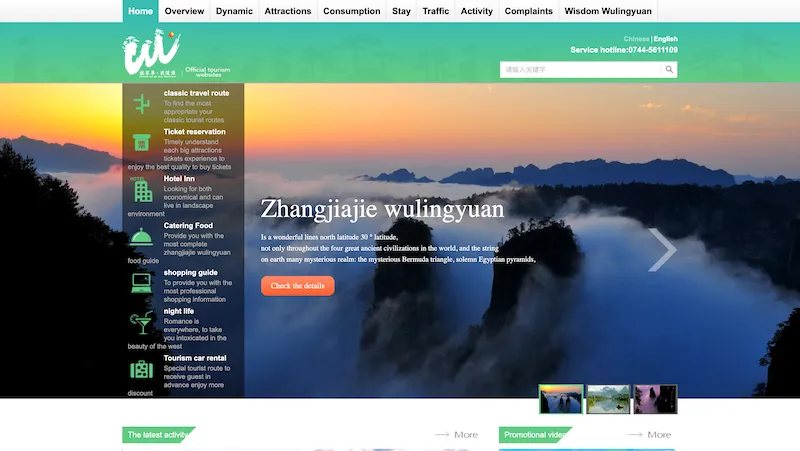
First-time visitors often confuse the different places that share the Zhangjiajie name. They are spread out, and picking the wrong base costs you hours in transit.
- Zhangjiajie City is the urban transport hub in Hunan Province, central China, where the airport, train stations, and the lower station for Tianmen Mountain sit.
- Wulingyuan Scenic Area is the broader UNESCO site outside the city that holds the main park and several smaller zones.
- Zhangjiajie National Forest Park (张家界国家森林公园, the name to show a taxi driver) sits inside Wulingyuan and contains the famous sandstone pillars.
- Tianmen Mountain is a separate mountain near the city center with a giant natural arch (Tianmen Cave), the 99 Bends Road, and cliffside glass skywalks.
If your priority is the pillar landscape, allow 2 to 3 full days minimum for the National Forest Park and treat Tianmen Mountain as a separate one-day add-on. If you also plan the glass bridge in Zhangjiajie Grand Canyon, read our glass bridge guide, which is a separate ticket.
The Avatar Name
In 2010, a pillar in the Yuanjiajie section of the park was renamed "Avatar Hallelujah Mountain" after the film's success. Local sources link the Southern Sky Column (南天一柱) to it. The film makers have said the landscape was one of several inspirations, so treat the name as a marketing link rather than a literal film location. The scale of the stone columns justifies the trip regardless of the movie connection.
Getting There and Reaching the Gates
Flights and Trains into Zhangjiajie City
By Air: Zhangjiajie Hehua Airport (DYG) takes direct flights from major Chinese hubs. Flight times are roughly 2.5 hours from Beijing, 2 hours from Shanghai, and 1.5 hours from Guangzhou, Xi'an, or Chengdu. From the terminal, a taxi into Zhangjiajie City takes about 30 minutes and costs ¥50-80.
By Train: High-speed rail arrives at Zhangjiajie West Station (张家界西站), which connects to major cities including Changsha (2.5 hours, useful for onward rail or flights to Guilin) and Wuhan (4 hours). Older, slower regular trains use Zhangjiajie Station, which has more connections if high-speed tickets sell out.
Transferring from the City to the Park
The forest park sits about 40 minutes from Zhangjiajie City by road. You can take a cheap bus from the city, though fares and stops change, so ask at your hotel before setting out. A taxi from the city to the park runs roughly ¥100-150. Because the park has multiple entrance gates (such as the Wulingyuan gate and the Forest Park gate) miles apart, agree on the exact gate with your driver before you get in, and match it to the gate on your ticket reservation.
Inside Zhangjiajie National Forest Park
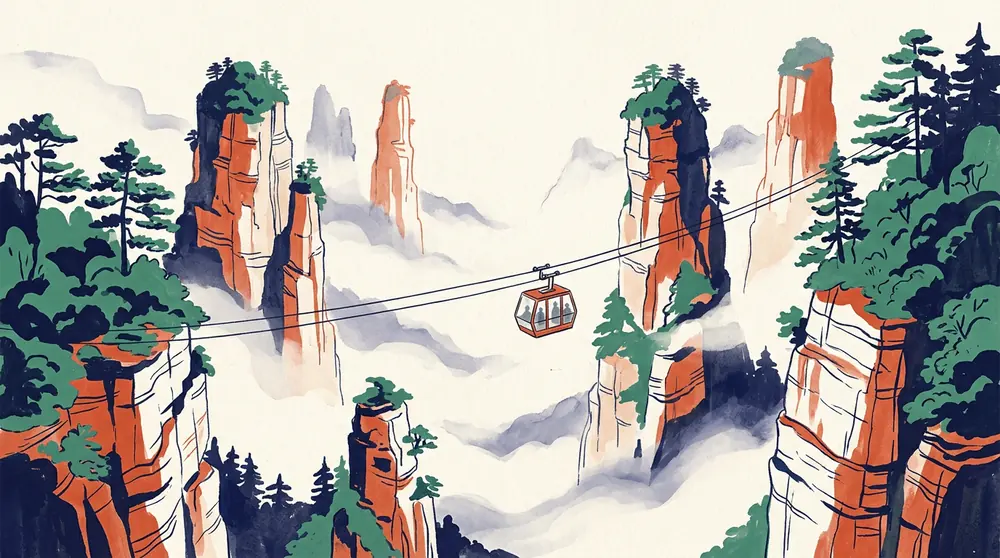
The park divides into upper plateaus and lower valley floors. How you link them determines how much time you spend queuing versus walking.
How the Four Main Areas Compare
Yuanjiajie (袁家界) holds Avatar Hallelujah Mountain and the "First Bridge Under Heaven" natural arch. It delivers the most iconic pillar views in the park, which also makes it the most crowded plateau. Aim to hit it early in the morning before tour groups pack the railings.
Tianzi Mountain (天子山) sits higher up, looking out over a wide sea of peaks. It has its own cable car access and draws slightly thinner crowds than Yuanjiajie. Because shuttle buses link the upper plateaus, pairing Tianzi Mountain with Yuanjiajie on the same day is the most logical upper-level route.
Golden Whip Stream (金鞭溪) runs along the valley floor for 7.5km, taking about 3 to 4 hours on foot (see our Golden Whip Stream guide). Instead of looking down on the pillars, you walk at their base along a flat, shaded stream bed that stays cool in summer.
Yangjiajie (杨家界) sees far fewer tourists than Yuanjiajie. It features dramatic cliff views and longer, more demanding hikes for adventurous visitors who want to step away from the main bus corridors.
Elevators, Cable Cars, and Shuttles
Free eco-buses connect the major areas at both the upper and lower levels and are included in the standard combined ticket. They run frequently, though onboard announcements are in Chinese, so keep the Chinese characters for your next stop handy.
To move vertically between the valley floor and the plateaus, choose between paying for mechanical lifts or hiking steep stone stairs for 2+ hours (walking down is easier on the lungs than climbing up, though hard on the knees). Confirm current lift rates on the booking page or at the ticket window (prices last checked November 2026):
| Lift / Add-On | Price & Details |
|---|---|
| Bailong Elevator (百龙电梯) | ¥65 one way, ¥130 round trip (official 2026 notice; some sources quote up to ¥72). Marketed as the "world's tallest outdoor elevator," it rises 326 meters up the cliff face in 2 minutes. Peak queues reach 1-2 hours. |
| Tianzi Mountain cable car | ¥72 one way, ¥144 round trip (official 2026 notice; some sources cite up to ¥76). |
| Yangjiajie cable car | about ¥76 one way. |
| Huangshi Village cable car | about ¥65 one way. |
Tickets, Reservations, and 3-Day Budget
2026 Park Ticket Prices
Entry to Zhangjiajie National Forest Park covers 4 consecutive days from your first scan. Official figures vary slightly depending on the platform: the Zhangjiajie Tourism net 2026 ticket notice (checked November 2026, with peak-season rates listed from 1 January and also dated 7 September 2026) sets the combined scenery and eco-bus pass at ¥240 (concession ¥160), a scenery-only ticket at ¥168 (concession ¥87), and an unlimited annual pass at ¥298. Meanwhile, a Hunan government-linked hnzjj.com core-area ticket page lists the core-area ticket at ¥236, and other sites show ¥239. Expect to pay about ¥236-240 for the standard 4-day combined pass, plus an optional insurance fee of about ¥3 at the gate.
The combined pass covers the in-park eco-buses and the core zones: Yuanjiajie, Tianzi Mountain, Yangjiajie, Golden Whip Stream, Huangshizhai, Yaozizhai, Ten-Mile Gallery, and Suoxiyu. Concessions exist for children, seniors, and students. Ticket stations at the park operate from 7:30 to 17:00.

Real-Name Booking and Multi-Day Re-Entry Rules
According to a ticket-agent guide on park reservations (checked November 2026, which notes its details are for reference), the park uses real-name, time-slot, and gate-specific entry, so do not count on buying at a gate window on the day. For your first day, reserve a specific entrance gate and arrival time slot online through platforms like Trip.com or Ctrip. Entry is verified by your original ID (foreign passports are accepted) plus a face scan at the turnstile.
Crucially, the same ticket agent reports that each later re-entry during your 4-day validity window requires a new reservation, which is free. Our attraction ticket guide explains booking with a foreign passport, and you should reserve well ahead for major breaks listed in China public holidays 2027.
Budget Estimate for a 3-Day Trip
For a mid-range 3-day trip covering both the National Forest Park and Tianmen Mountain, expect roughly these per-person costs:
- Park ticket (4-day combined pass): about ¥236-240
- Tianmen Mountain ticket: ¥288 (one day, per official 2026 notice; glass walkway shoe covers cost ¥5 extra)
- In-park elevators and cable cars: ¥200-300
- Hotels (2 nights): ¥300-500
- Food: ¥150-250
- Local transport: ¥100-200
Estimated On-the-Ground Total: about ¥1,300-1,800 per person (about US$190-270 at ¥6.7 per dollar).
Tianmen Mountain: Major Cableway Changes
Tianmen Mountain's separate ¥288 ticket covers its cableway, buses, and upper tunnel escalators. For years, the signature thrill was riding the 7.5km main cable car from the city center for roughly 30 minutes to the summit. Since November 6, 2025, the upper section of the main cableway from the middle station to the summit closed for a multi-year upgrade. Further, a ticket-agent notice on Tianmen cableway renovations (dated 10 October 2026, checked November 2026) reports that starting 13 October 2026, all passenger operations on the old cableway routes stopped for renovation.
Under this restriction, Routes A and B are suspended with the resumption date to be announced, and only "Round-Trip Cableway Route C" (which uses the Tianmen Cave express cableway up and down, paired with the lower transport and tunnel escalators) remains open. Ticket sales run from 7:30 to 16:00. Decide before booking whether the mountain still appeals to you without the full-length ride from downtown. If you go, a ticket-agent booking guide for Tianmen Mountain (checked November 2026) notes that the mountain enforces real-name time-slot booking and recommends reserving at least 7 days ahead during the May to October peak season.
Itineraries: Two Days vs Three Days
The Core 2-Day Park Plan
With two days, skip Tianmen Mountain and spend both inside Zhangjiajie National Forest Park so elevator queues do not rush you.
- Day 1 (Upper Plateaus): Enter via the Wulingyuan gate at 7:30 opening to beat tour buses. Ride the Bailong Elevator up, walk the Yuanjiajie viewpoints, then walk or take the eco-bus to Tianzi Mountain. Ride the Tianzi Mountain cable car down and exit via the Wulingyuan gate.
- Day 2 (Valley Floor and Quiet Ridges): Enter via the Forest Park gate and walk Golden Whip Stream. From the stream, hike up to Yangjiajie, or reverse the route by starting high and descending into the valley.
Sample 3-Day Trip (Adding Tianmen Mountain)
With three days, split overnight stays between Zhangjiajie City and Wulingyuan Town to avoid backtracking.
- Day 1 (City and Tianmen): Arrive in Zhangjiajie, visit Tianmen Mountain on your timed entry slot, and sleep in Zhangjiajie City.
- Day 2 (Wulingyuan Upper Loop): Take an early bus or taxi to Wulingyuan Town, drop bags, follow the Day 1 upper-plateau route above, and sleep in Wulingyuan.
- Day 3 (Valley Walk and Departure): Walk Golden Whip Stream in the morning or use a free re-entry reservation to revisit viewpoints, then head to the airport or train station.
When to Go, Weather, and Fog
| Season | Weather | Crowds | Rating |
|---|---|---|---|
| Spring (Apr-May) | Mild, occasional rain | Moderate | ⭐⭐⭐⭐⭐ |
| Summer (Jun-Aug) | Hot, humid, rainy | High (school holidays) | ⭐⭐⭐ |
| Autumn (Sep-Nov) | Cool, clear, colorful | Moderate to high | ⭐⭐⭐⭐⭐ |
| Winter (Dec-Feb) | Cold, possible snow | Low | ⭐⭐⭐ |
Picking Your Month: April to May and September to November offer the best balance of clear skies and manageable temperatures. Summer brings heat, humidity, rain, and heavy domestic school-holiday crowds. Winter thins out the queues at the cost of shorter, chillier days. Avoid Chinese national holidays (1 to 5 May and 1 to 7 October in 2027), when viewing decks and lift queues swell. For a country-wide view, see best time to visit China.
Dealing with Fog: Mist around the pillars makes for dramatic photos until thick fog whites out the valley. Early mornings are often clearest, another reason to enter at opening. Bring a wide-angle lens and tripod for low-light mist, and build slack into your schedule to wait for clouds to part.
Where to Stay, Food, and Practical Prep
Choosing a Base
- Wulingyuan Town sits right outside the Wulingyuan gate with plenty of budget to mid-range hotels and sit-down restaurants, making it the best base for early park entry.
- Zhangjiajie City has more urban amenities and international hotel chains near the airport, train stations, and Tianmen Mountain, but requires the 40-minute transfer to the park.
- Inside the Park there are only limited, basic guesthouses. Book ahead if you want sunrise photography before the gates open.
Food and Packing
Food inside the park gates is basic and overpriced, so pack your own water and snacks for hiking days. Back in Wulingyuan Town, try Tujia ethnic minority cuisine, especially 三下锅 (Sānxiàguō), a rich mixed hotpot.
Mountain weather turns quickly, making comfortable hiking shoes, a rain jacket, and sunscreen essential. Bring a portable phone charger (your ticket, maps, and payments depend on it) plus some physical cash for small park vendors who do not take mobile pay. For everything else, see our Alipay setup.
FAQ
Where are the Avatar mountains in China?
They are in Zhangjiajie National Forest Park within the Wulingyuan Scenic Area of Hunan Province. The famous pillar renamed Avatar Hallelujah Mountain sits in the Yuanjiajie section of the park.
How much is the Zhangjiajie National Forest Park ticket?
The 4-day combined pass (scenery plus eco-buses) is about ¥236-240 (about US$36) in 2026, depending on whether you check the Hunan government-linked ticket page (¥236) or the Zhangjiajie Tourism net notice (¥240). The Bailong Elevator and cable cars cost extra.
How many days do you need at the Avatar mountains?
Two full days covers the core park areas of Yuanjiajie, Tianzi Mountain, and Golden Whip Stream without rushing. Add a third full day if you also want to visit Tianmen Mountain near the city.
Is Zhangjiajie worth visiting in winter?
Winter brings cold weather and possible mist or snow, which cuts visibility at times but keeps crowds low. Spring (April to May) and autumn (September to November) offer milder temperatures and more reliable views.
Do I need a passport to buy tickets?
Yes, the park uses real-name entry linked to your ID and a face scan, and a foreign passport is accepted at the gate. You must reserve a specific gate and time slot ahead of time, especially during busy holidays, and make a free reservation for each subsequent day you re-enter.
Planning your Zhangjiajie trip? The China Survival Kit includes national park guides, transportation tips, and offline maps for remote areas.
Essential Apps for This Guide
All 19 apps →

More guides like this
- DestinationsZhangjiajie Glass Bridge 2026: Tickets, Tips & Visitor Guide
- DestinationsGolden Whip Stream Zhangjiajie: Complete Hiking Guide (2026)
- DestinationsZhangjiajie National Forest Park Tickets: 2026 Guide
- DestinationsAvenue of Stars Hong Kong: Complete 2026 Visitor Guide
- DestinationsHangzhou West Lake: Complete Visitor Guide (2026)
- DestinationsM50 Art District Shanghai: Galleries & Visitor Guide (2026)
Rules and apps in China change often. Guides are checked against official sources — see our editorial & verification standards. Spotted something out of date? Tell us at [email protected]. Published December 8, 2025.