Terracotta Army Guide: The Three Pits and How to Visit
The Terracotta Army is about 8,000 clay figures found in 1974 near Xi'an. See what the three pits hold, the best order to visit and how long to allow.
Updated 12 min readCSK Team
On this page10 sections
Quick answer: The Terracotta Army is a buried force of about 8,000 life-size clay soldiers and horses guarding the tomb of Qin Shi Huang, China's first emperor, found in 1974 near Xi'an. Pit 1 holds the main infantry formation, Pit 2 displays kneeling archers and cavalry, and Pit 3 is the command post. One 120-yuan ticket covers the pits and Lishan Garden; allow about three hours on site for the full ticket.
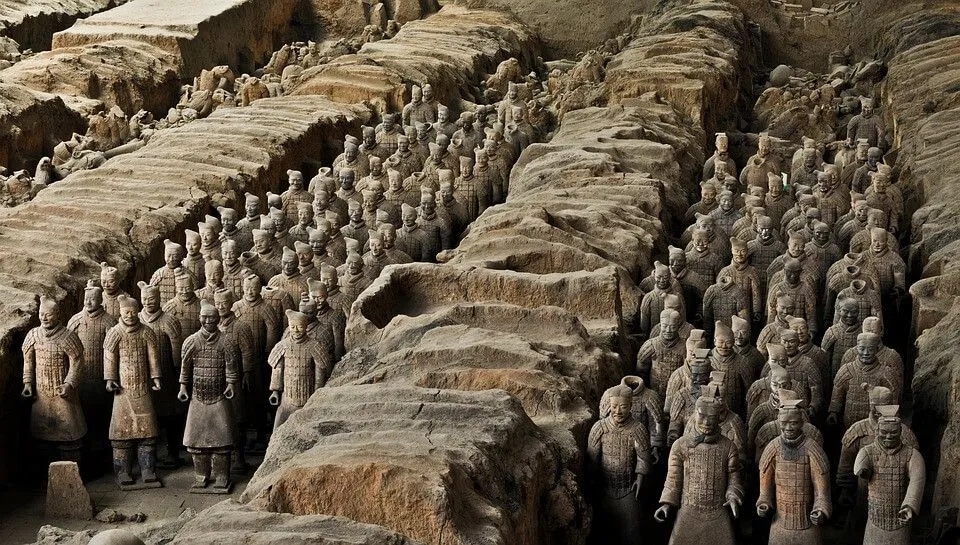
Most visitors arrive expecting a single museum hall and find a spread-out archaeological complex divided into two separate zones: the three excavation pits and the burial mound park at Lishan Garden. Understanding how those zones connect, why the pit sequence matters, and how real-name passport ticketing works determines whether you spend your morning looking at clay soldiers or standing in the wrong queue.
Facts below come from the Shaanxi provincial government's English site, People's Daily, Xinhua, UNESCO documents and the museum's own history and ticketing pages (read on 5 November 2026 and checked November 2026). Where figures differ by date or source, we state the difference. For step-by-step booking and transport details from Xi'an, see our Terracotta Army tickets guide.
What the Terracotta Army is
Qin Shi Huang unified China in 221 BC and became its first emperor. Work on his tomb complex began during his reign, pairing a large burial mound with underground pits of clay soldiers built to guard him in the afterlife. According to Britannica, the army stands in battle formation facing east towards the Qin state's former rivals.
The army remained underground until March 1974, when farmers digging a well in Lintong District outside Xi'an struck clay fragments. Archaeologists moved in immediately. According to the museum, the Qin Shi Huang Terracotta Army Museum opened to the public on 1 October 1979, and UNESCO placed the Mausoleum of the First Qin Emperor on the World Heritage List on 11 December 1987.
In 2024, on the 50th anniversary of the discovery, People's Daily reported that the three pits hold about 8,000 clay warriors and horses alongside 40,000 weapons across more than 20,000 square metres. You will not see all 8,000 standing in ranks. Many figures remain buried in earth, and the emperor's burial mound itself has never been opened. Britannica notes that archaeologists expect work across the wider complex to take many more years.
How the two-site ticket works
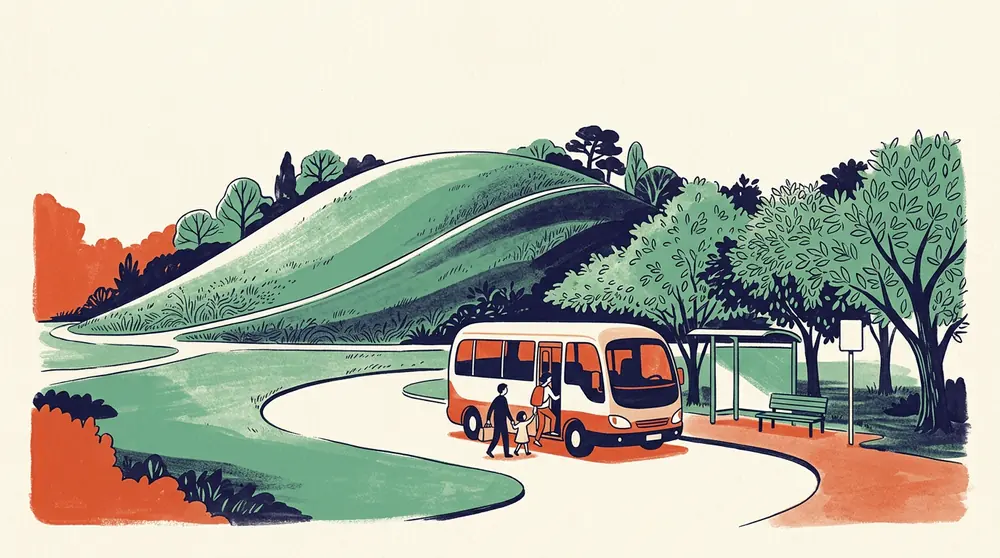
The official name of the attraction is the Emperor Qinshihuang's Mausoleum Site Museum, and a single admission covers two distinct sites: the Terracotta Army Museum (the three pits) and the Mausoleum National Archaeological Park, known as Lishan Garden, where the burial mound stands. According to the Qinshihuang Mausoleum Site Museum, ticketing (Chinese) page (checked November 2026), tickets are valid only on the booked visit date, a free shuttle bus links the two sites, and staff check tickets three times across the complex.
According to the Museum home page and official ticketing rules (checked November 2026), the museum uses real-name reservation for all visitors, including foreign, Hong Kong, Macao and Taiwan travellers, booked via the official website or WeChat account. Entry is checked directly against the original ID used to book, and accepted documents include foreign passports, Hong Kong/Macao permits and Taiwan compatriot permits. Leave your passport at your hotel and you will not get in.
Pricing and hours follow strict seasonal rules on the official ticketing page (checked November 2026):
- Standard admission: 120 yuan for adults.
- Student rate: 60 yuan (half price), restricted to full-time undergraduate-and-below students at Chinese institutions holding a valid student card (adult education and online courses are excluded).
- Children and senior concessions: Free entry rules on the Chinese ticketing notice (for children under 16 with a guardian, seniors aged 65 and over, and disabled visitors) are written specifically for Chinese nationals ("中国籍") and do not state that they extend to foreign visitors. Foreign families should budget full price for children rather than expecting a gate discount.
- Check-in hours: From 16 March to 15 November, ticket check-in runs from 8:30 to 17:00. From 16 November to 15 March, winter hours apply and check-in closes earlier, running from 8:30 to 16:30. Public holiday hours follow separate notices. If you are travelling around mid-November, that 16 November cut-off drops the last entry by half an hour, which matters if you plan an afternoon arrival.
The three pits compared
The three excavation halls sit inside the Terracotta Army Museum zone. Each serves a different part of the ancient military layout, and each offers a different viewing angle for visitors.
| Pit | What it is | What you see |
|---|---|---|
| Pit 1 | The largest. A long rectangular hall roofed over for visitors | Infantry in battle formation, rows of warriors facing east, with restoration work visible at the ends |
| Pit 2 | Mixed forces | Cavalry, chariots, archers and infantry; much of it is still buried, with a few figures displayed in glass cases |
| Pit 3 | The smallest | A command post, with high-ranking officers and a more compact layout |
Pit 1: the main battle formation
Pit 1 is the image most travellers carry in their heads before arriving. An ICOMOS evaluation on the UNESCO site recorded a provisional 1985 count of 1,087 warriors here, with infantry and cavalry in battle order and archers guarding the flanks. Because excavation has continued for decades since 1985, treat that 1,087 figure as an early baseline rather than a current total.
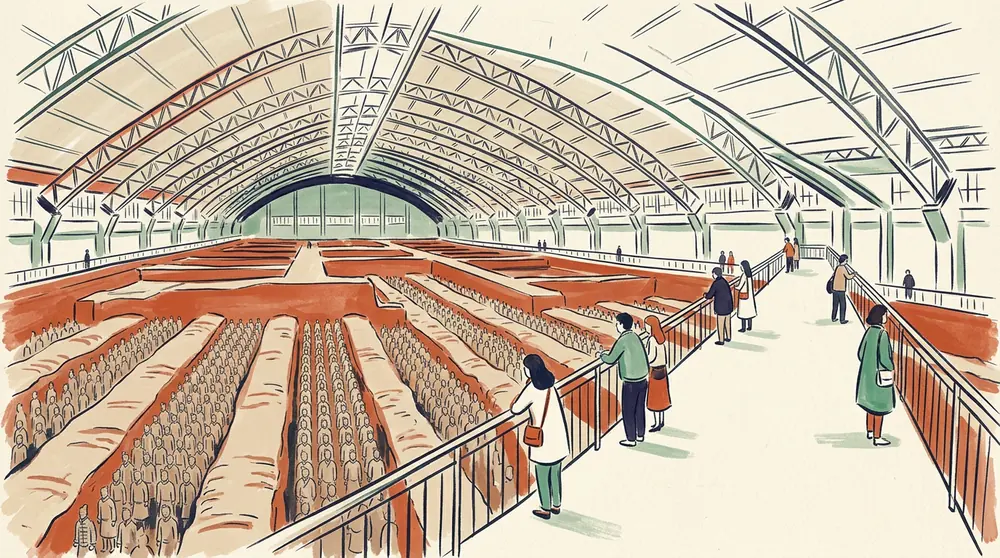
The hall is built over the earth trenches with a raised walkway around the perimeter. Because you view the trenches from above and from the sides rather than at ground level, Pit 1 is about scale rather than close-up detail. Look first at the front ranks facing east, where individual faces and hairstyles are easiest to pick out from the rail, then walk toward the rear sections where archaeologists piece broken figures back together from fragments. Seeing intact files at one end and shattered terracotta in collapsed earth at the other explains how the army actually survived: crushed underground and reassembled piece by piece.
Pit 2: close-up detail in glass cases
According to the Shaanxi provincial government, Pit 2 holds around 1,300 warriors and horses across mixed military units: cavalry, chariots, kneeling and standing archers, and infantry. Unlike Pit 1, much of the trench remains unexcavated earth, which can surprise visitors expecting another open sea of statues.
The compensation is proximity. The provincial government page notes that five individual figures are displayed up close inside glass cases, including a kneeling archer, a standing archer, a cavalryman with his horse, and an officer. If you found the viewing rail in Pit 1 too distant to make out armour lacing, shoe treads or facial expressions, spend your time at these five cases in Pit 2.
Pit 3: the command post
The Shaanxi government page lists Pit 3 as the smallest hall, holding 72 warriors and horses. It is believed to be the army's headquarters because many high-ranking officers were found there. It is the quietest of the three halls and a good place to slow down.
Which order to visit the pits
You have a choice between narrative build-up and crowd control:
- Pit 3, then Pit 2, then Pit 1 (the Shaanxi government's suggested order): The Shaanxi government's visitor page recommends starting at the smallest hall (Pit 3), moving to the mixed forces and glass cases of Pit 2, and finishing at Pit 1. The logic is theatrical: if you see the largest hall first, the smaller, mostly unexcavated trenches of Pit 2 and the 72 figures of Pit 3 can feel anticlimactic. Building up from command post to full infantry keeps each hall interesting, and reading the close-up cases in Pit 2 first helps you recognise what you are looking at from a distance in Pit 1.
- Pit 1, then Pit 2, then Pit 3 (the early-bird crowd strategy): Most visitors walk straight into Pit 1 because it sits closest to the main entrance approach. If you arrive right at the 8:30 opening or are visiting on a busy day, go straight to Pit 1 first. Getting the front walkway of Pit 1 before tour groups stack three-deep at the railing is worth more than narrative pacing. Once Pit 1 fills up, retreat to the glass cases in Pit 2 and the quieter walkways of Pit 3.
Beyond the pits and Lishan Garden
Your ticket covers more than the three excavation halls. Traveller guides often mention extra museum buildings, such as the Bronze Chariots and Horses Museum in the Lishan Garden area, where both original bronze chariots have been displayed since April 2024 (described in guides as a highlight for their fine detail) and a cinema, though exact hall layouts are not confirmed on the basic ticketing page, so check the museum's English map on arrival.
Do not forget the second half of your ticket: the Mausoleum National Archaeological Park (Lishan Garden), reached by the free museum shuttle. The museum's ticketing page estimates about 1.5 hours for the Terracotta Army Museum and another 1.5 hours for Lishan Garden. Walk distances between the gates, halls and shuttle stops are long, so factor that walking effort into your afternoon energy.
How long to allow
Time estimates depend on whether you only want to see the three pits or plan to use both parts of the two-site ticket:
| Plan | Time |
|---|---|
| Quick tour of the three pits | 2 to 2.5 hours |
| Comfortable visit with extra exhibits | 3 to 4 hours |
| Full half day with lunch and a guide | About 5 hours |
| With the trip from central Xi'an and back | Add 1.5 to 3 hours of transport, depending on your method |
The table above reflects traveller guide estimates, which align with the museum's 3-hour benchmark across both zones once you include walking between buildings and waiting for the free shuttle. If you allow only 2 hours total, you will have to skip Lishan Garden entirely.
Getting there and hiring a guide
Most travellers base themselves in central Xi'an and arrive by high-speed train or plane. If you are connecting from the capital, see our Beijing to Xi'an train guide and our broader high-speed rail guide. If you are slotting Xi'an into a wider route between Beijing and Chengdu, see our 10-day itinerary.
For getting from central Xi'an out to Lintong District, secondary travel sources report that visitors can take Metro Line 9 to Huaqingchi station (exit C) and transfer to a local bus. Tourist Bus 5 (306) has started at Xi'an East Station since 29 August 2026, after moving from Xi'an Railway Station to the Fangzhicheng hub in 2019. Because bus stops and metro links can shift, check our Terracotta Army tickets guide for current transport options and times.
Once inside, the pits are visually striking on their own, but English signage is not detailed. Without explanation, Pit 2 looks mostly like mounds of dirt and Pit 3 is small and quick to see. A guide bridges that gap by explaining how the figures were made, the Qin dynasty and the excavation.
- Self-guided with audio or licensed site guide: Good for independent travellers who want to control their pace at the railings and take the Lishan Garden shuttle on their own schedule. Our tickets guide covers what to check before hiring a guide.
- Bundled day tours: If you prefer not to manage metro transfers and bus hubs in Chinese, a Klook search shows day tours that bundle round-trip transport from Xi'an with ticket handling. Some links on this page are affiliate links, which means we may earn a commission at no cost to you. We cannot verify any individual operator, so check what is included and the group size.
Best time to go
Xi'an has hot summers and cold winters, making spring (April and May) and autumn (September and October) the most comfortable seasons for walking between the halls and Lishan Garden. For broader regional weather patterns, see our best time to visit China guide, and if you must travel in July or August, read our heat guide before tackling the outdoor walks between buildings.
Crowds matter as much as temperature. Avoid weekends if your schedule allows, and stay clear of major Chinese public holidays when walkways around Pit 1 become packed. According to the State Council notice published on 5 November 2026, key 2027 holiday periods include Labor Day from 1 to 5 May and National Day from 1 to 7 October. Go as early as possible on any day of the year.
Pair it with other sights
Because the museum sits out in Lintong District, you can group nearby sights during the day and save central Xi'an for the evening:
- Huaqing Palace: A Tang-dynasty hot spring palace located near the museum in Lintong, often combined with the warriors on the same day trip (see the tickets guide for routing). If you spend a full 3 to 4 hours across the pits and Lishan Garden, pairing Huaqing Palace works best when you start at 8:30.
- Xi'an city wall and the Muslim Quarter: Easy to do in the evening once you return to central Xi'an, requiring none of your daytime sightseeing window.
- Beijing: If you want to compare Qin Shi Huang's underground tomb complex with later Ming and Qing imperial architecture, start with our Forbidden City guide.
What to bring
- Your physical passport: Required for real-name ticket checks at entry (see the tickets guide). Keep it accessible for the three ticket checks across the two sites.
- Comfortable walking shoes: The complex involves long walks between the main gate, the three pit halls and the Lishan Garden park, plus standing on hard floors along the viewing walkways.
- Phone with Alipay or an international card: Needed for food, audio guides or transport; setup is covered in our Alipay guide.
- Small cash: Keep yuan banknotes as a backup in case card terminals or app connections fail.
- Water, a hat and sun protection: Essential in summer for the exposed walks between museum halls and shuttle stops.
Inside the halls, rules on flash photography and tripods can change, so watch for posted signs at each pit entrance, and never touch the figures or lean across the barriers.
FAQ
What is the Terracotta Army?
It is a collection of life-size clay soldiers and horses buried near the tomb of Qin Shi Huang, China's first emperor. Farmers found it in 1974 near Xi'an, and UNESCO listed it in 1987.
How many terracotta warriors are there?
People's Daily reported in 2024 about 8,000 figures of warriors and horses across three pits. Excavated numbers per pit differ by source and date, and many figures are still buried.
Which Terracotta Army pit is the best?
Pit 1 is the largest and the most photographed. Pit 2 has glass cases where you can see individual figures up close. Pit 3 is small and quiet. Most visitors see all three.
How long do you need at the Terracotta Army?
Allow 3 to 4 hours at the site for a comfortable visit, plus transport from Xi'an. The museum estimates about 1.5 hours each for the Terracotta Army Museum and Lishan Garden on the same ticket, while a quick tour of just the three pits takes 2 to 2.5 hours.
Where is the Terracotta Army located?
It is in Lintong District, east of central Xi'an in Shaanxi Province. See our tickets guide for transport options.
More guides like this
- DestinationsTerracotta Army Tickets and Tours From Xi'an (2026)
- DestinationsLijiang vs Dali: Which Yunnan Town to Visit? (2026)
- DestinationsTemple of Heaven China: Visit Guide and Summer Palace
- DestinationsAvenue of Stars Hong Kong: Complete 2026 Visitor Guide
- DestinationsDetian Waterfall Guide: China's Border Waterfall (2026)
- DestinationsForbidden City Beijing Guide: Route, Layout, Time (2026)
Rules and apps in China change often. Spotted something out of date? Tell us at [email protected]. Published November 7, 2026.