Forbidden City Beijing Guide: Route, Layout, Time (2026)
The Forbidden City takes 3 to 4 hours on a one-way route from the Meridian Gate in the south to the Gate of Divine Prowess in the north. Layout and what to see.
Updated 12 min readCSK Team
On this page10 sections
- What the Forbidden City is
- Essential ticket and session rules
- Layout: one central axis
- Entrance, exit and getting there
- Choosing your route and time needed
- Opening hours, seasons and best time of day
- What to look for along the route
- Combining the palace with other Beijing sights
- Bag storage, audio guides, food and security
- FAQ
Quick answer: The Forbidden City, now the Palace Museum, is a 720,000 square metre complex in central Beijing capped at 40,000 visitors daily. Allow 3 to 4 hours for a comfortable one-way walk from the Meridian Gate in the south to the Gate of Divine Prowess in the north, or 2 hours for the main axis only. No same-day tickets are sold, so book ahead.
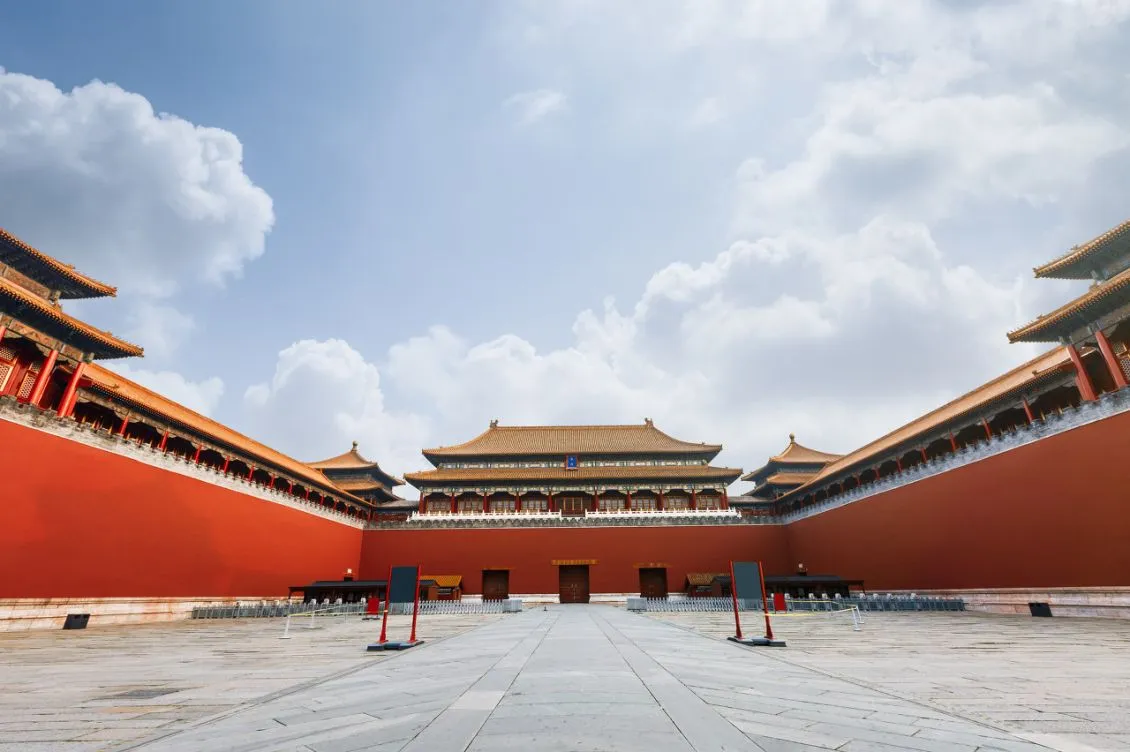
The Forbidden City is structured as a strict south-to-north procession, and your visit has to follow that same geometry. Knowing how the complex is divided, which gates let you in, and where the crowds bottleneck determines whether you spend your morning looking at Ming and Qing architecture or walking the wrong way outside the moat.
For step-by-step booking, use our Forbidden City tickets guide. Facts on this page draw from the Beijing municipal government's English pages, the UNESCO listing, and the museum's visitor information read on 5 November 2026 and checked November 2026, alongside traveller guides and Beijing local-info site Bendibao. Because opening arrangements and room access change for conservation work and events, verify current schedules on the Palace Museum, Visit (English) page on the day you book.
What the Forbidden City is
Built between 1406 and 1420, the Forbidden City served as the imperial palace of the Ming and Qing dynasties. According to UNESCO, it was the seat of supreme power for more than five centuries, housing 14 Ming and 10 Qing emperors across nearly 10,000 rooms filled with furniture and works of art. The name "Forbidden" reflects its history as a closed imperial compound that ordinary people could not enter. After the last emperor left in 1924, the complex became the Palace Museum, opening to the public in 1925 and gaining UNESCO World Heritage status in 1987.
The Beijing government puts the site's footprint at more than 720,000 square metres and its collection at over 1.5 million items or sets of relics. Most structures are built of timber, topped with yellow roof tiles reserved for imperial use, and set above white marble terraces inside red walls, corner towers, and a wide moat.
Essential ticket and session rules
A few rules in the Palace Museum visitor notice (Chinese) and official ticket portal (checked November 2026), plus a Bendibao National Day 2026 summary, dictate how you plan your day:
- Advance booking and prices: Tickets are not sold for the same day and go on sale 7 days ahead at 20:00 in the official "故宫博物院" WeChat mini program. Non-mainland visitors book with a passport (or other listed permit), at one ticket per passport per visit day. Bendibao lists the peak-season main ticket (April to October) at ¥60, with the Treasure Gallery and Gallery of Clocks at ¥10 each.
- Morning vs. afternoon sessions: Tickets are sold for a specific date and session. Morning tickets must be checked in by 12:00 at the latest; afternoon tickets can be checked in from 11:00 at the earliest.
- Cancellation and no-shows: Tickets are non-transferable and cannot be changed after sale. Cancel by 24:00 the day before your visit to avoid a no-show record; accumulating 3 no-shows within 180 days blocks you from booking for 60 days starting the day after the third no-show.
- Customer service: Call 400-950-1925 from 08:00 to 20:00 daily.
Layout: one central axis
The entire palace aligns along a single north-south axis, the central line that organises Beijing itself. Dividing the site into three zones makes it easier to pace your energy.
| Zone | What it is | Main buildings |
|---|---|---|
| Outer Court (south) | Ceremonial and state business | Meridian Gate, Gate of Supreme Harmony, Hall of Supreme Harmony, Hall of Central Harmony, Hall of Preserving Harmony |
| Inner Court (centre and north) | Emperor's residence and family life | Palace of Heavenly Purity, Hall of Union, Palace of Earthly Tranquility |
| Side palaces and Imperial Garden | Concubines' and princes' quarters, gardens | Six Eastern Palaces, Six Western Palaces, Imperial Garden |
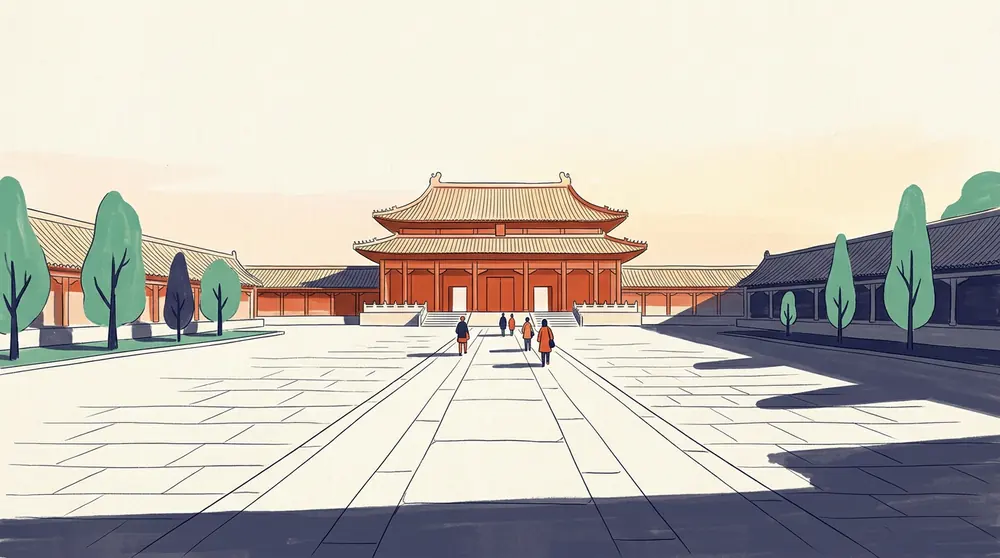
The trade-off across these zones is scale versus intimacy. The Outer Court is built for state ceremony, with vast squares where everyone funnels toward the three main halls. In the Inner Court and side palaces, the layout breaks into tighter residential courtyards and smaller exhibition rooms. Spending two hours in the southern squares leaves too little energy for the northern quarters.
Entrance, exit and getting there
Plan your visit strictly as a one-way walk from south to north. According to the museum's official notice:
- Entry: The Meridian Gate (Wumen, south gate) is the only visitor entrance.
- Exit: Leave through the Gate of Divine Prowess (Shenwumen, also translated Gate of Divine Might, north) or the East Prosperity Gate (Donghuamen, east).
Do not let a taxi drop you at the north gate in the morning, or you will have to walk all the way around the walled compound to enter from the south. The museum's official transport page notes there is no dedicated car park and lists these public transit stops:
- South entrance (Wumen): Subway Line 1 stops at Tiananmen East (Tiananmen Dong) and Tiananmen West (Tiananmen Xi); see our Beijing subway guide.
- North exit (Shenwumen): Served by the Shenwumen bus stop (buses 101, 103, 109, 124 trolleybus, 58, 685, night 13, sightseeing lines 1 and 2) and Jingshan East Gate stop.
- East exit (Donghuamen): Served by the Donghuamen bus stop (buses 2, 82, night 2, sightseeing line 2).
How you walk to the Meridian Gate depends on your bookings. According to Bendibao's 2026 summary, visitors who booked both Tiananmen Square and the Palace Museum queue at the Tiananmen Square security gates and walk one-way south to north through the Tiananmen passage and Duanmen to Wumen. An older 2022 Bendibao transport guide notes that the Tiananmen-to-Duanmen walkway opens Tuesday to Sunday 08:00 to 16:00 and closes Mondays, per on-site notices. Visitors who booked only the Palace Museum reach Wumen along the moat via the Quezuo or Queyou gates. Build in extra time for security checks along the approach. Carry your original passport; at entry, the museum checks your original ID and uses real-time face recognition matching, which the museum states is not stored.
Choosing your route and time needed
Most visitor guides recommend following the central axis south to north and adding one optional detour in the middle section:
- Meridian Gate and the Golden Stream. Cross five marble bridges over the Golden Stream into the ceremonial courtyard of the Outer Court.
- Hall of Supreme Harmony. The largest and most important ceremonial hall. Entry inside is usually not allowed, so view the throne from the open doorway.
- Hall of Central Harmony and Hall of Preserving Harmony. Two smaller halls used by emperors for ceremony rehearsals and imperial examinations. Walk behind the Hall of Preserving Harmony to see its carved marble ramp.
- Inner Court gate and Palace of Heavenly Purity. Crossing this gate shifts the architecture from ceremonial squares to the emperor's former residence and audience hall.
- Hall of Union and Palace of Earthly Tranquility. The central Inner Court structures, including the empress's former residence.
- Imperial Garden. Shaded by old cypresses and rockeries, this is a practical place to rest before leaving, as seating is scarce across the main courtyards.
- Gate of Divine Prowess. Exit north and cross the road into Jingshan Park for the elevated view looking back over the yellow roofs.
When to abandon the main axis: If you have seen the central halls before or prefer quieter courtyards, the Beijing government's route page suggests turning right immediately after the Meridian Gate toward the Gate of Blending Harmony and the Martial Gallery, working north to enter the Imperial Garden from the east. First-time visitors who dislike dense crowds can also step into the parallel side lanes right after the Hall of Supreme Harmony.
Optional detours and pacing
Decide on detours after finishing the Outer Court, when you can judge your remaining energy.
| Detour | What you see | Time |
|---|---|---|
| Six Eastern and Western Palaces | Original living quarters, small exhibitions | 30 to 60 minutes |
| Treasure Gallery | Decorative and ceremonial objects, separately ticketed | 30 to 45 minutes |
| Gallery of Clocks | Imperial timepieces, separately ticketed | 20 to 30 minutes |
| Temporary exhibitions in the Meridian Gate halls | Changing displays | 30 minutes |
For imperial craft, pick the Treasure Gallery or Gallery of Clocks; for living quarters, pick the Six Eastern and Western Palaces. How much you add sets your total time:
| Time | What you can do |
|---|---|
| About 2 hours | Central axis only, with little time inside exhibits (good for deep winter or fast walkers) |
| 3 to 4 hours | Central axis, Imperial Garden and one detour; the comfortable choice for most first-time visitors |
| 5 or more hours | Axis plus both side palace blocks, separately ticketed galleries, label reading and a lunch break |
Wear flat shoes. Walking the hard stone surfaces with detours easily puts 8 to 10 kilometres on your feet (our estimate, not a museum figure). Check the museum's English website before your visit to confirm which galleries and temporary displays are open.
Opening hours, seasons and best time of day
According to the official visit page and visitor rules, the Palace Museum opens Tuesday to Sunday and closes on Mondays except on public holidays:
- Peak season (1 April to 31 October): 08:30 to 17:00, last entry at 16:00.
- Off-peak season (1 November to 31 March): 08:30 to 16:30, last entry at 15:30.
Aim for opening time at 08:30 on a weekday. Midday is busiest when the morning and afternoon sessions overlap between 11:00 and 12:00. If you hold an afternoon ticket, watch the last-entry cutoff, especially in winter.
Summer is hot and the wide southern courtyards have almost no shade; read our summer heat guide before a July visit. Winter has thinner crowds but requires warm layers for hours outdoors. Avoid Chinese public holidays if possible. The State Council notice published on 5 November 2026 lists the 2027 holidays, including Spring Festival (5 to 13 February) and National Day (1 to 7 October).
What to look for along the route
- Roof corners: The small ridge figures lined up on roof corners are a visual code for hierarchy; more figures mean a higher-ranking building.
- Ground-level craft: Focus on exterior stonework such as the carved marble ramps and the bronze incense burners in the courtyards.
- Doorway signs: Many halls have English captions mounted by the doors explaining who lived or worked inside.
Combining the palace with other Beijing sights
Link adjacent stops on foot from south to north: start at Tiananmen Square in the morning, walk through the palace, and exit north at the Gate of Divine Prowess right beside Jingshan Park and the surrounding hutongs. See our things to do in Beijing and hutong walking tour guide.
Do not squeeze the Forbidden City, the Temple of Heaven, and the Summer Palace into one rushed day. The other two sit across the city and require heavy walking of their own; see our Temple of Heaven and Summer Palace guide. The Great Wall takes a half or full day by itself, covered in Great Wall tours from Beijing.
Booking a guided tour vs. going solo
If you prefer a guided walk, platforms such as Klook list palace tours. Some links on this page are affiliate links, meaning we may earn a commission at no cost to you.
Treat third-party listings with care. The Palace Museum states in its official notice that it has authorised no third party or individual to resell tickets (whether for main admission, the Gallery of Clocks, or the Treasure Gallery) and tells visitors to book only through its official WeChat mini program. We cannot verify any specific tour operator. If you book a commercial tour, compare the package price against ticket face value, verify that a licensed guide and entrance ticket are included, and ensure the operator collects your passport details in advance for a real-name booking.
Bag storage, audio guides, food and security
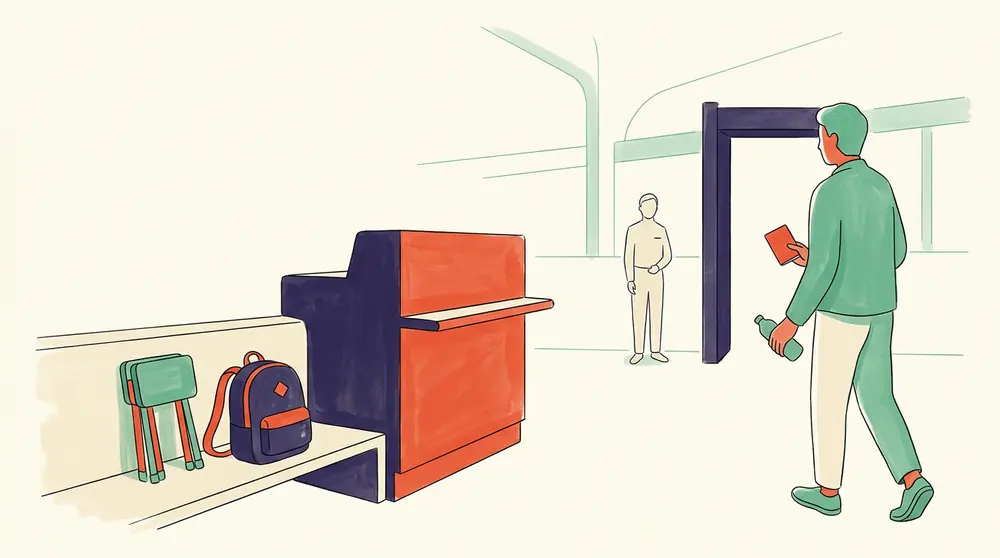
Entry involves strict banned-item screening at the security arches, so packing light saves time:
- Luggage storage and forwarding: According to the official visiting rules, the museum provides bag storage and free luggage forwarding for suitcases and bags 20 inches or larger (valuables, electronics, food, and fragile items are not accepted). Drop bags at the visitor service centre west of Duanmen Square between 08:30 and 16:00 in peak season (08:30 to 15:30 off-peak). Collect them outside Shenwumen (east side of the square) or outside Donghuamen (north side of the square); Bendibao reports peak-season collection runs 09:30 to 17:10.
- Banned items: Leave camping and resting gear at your hotel. The museum's banned list reportedly includes folding tables, folding chairs, and picnic mats, so check the notice on the day.
- Audio guides and touts: Ignore people outside the gates offering unsolicited "guide" services; see China tourist scams to avoid. Instead, use the official audio guide inside. According to Bendibao, rental points sit east and west of Wumen and at Zhaodemen, Zhendumen, Qianqingmen, and Shenwumen stations (open 08:30 to 16:00), with return points at Donghuamen or Shenwumen (08:30 to 17:00).
- Food, water and toilets: You can bring water through security screening. Use toilets and get water before entering the Outer Court, as facilities are scarce along the initial ceremonial stretch. For food inside, the museum's official guide page lists dining outlets among on-site facilities, and Bendibao notes that restaurants and shops can be located on the "故宫博物院" mini-program map.
- Photography: Allowed across most outdoor courtyards, though certain interiors and special exhibitions restrict flash or photography altogether.
FAQ
How long does it take to visit the Forbidden City?
Plan 3 to 4 hours for a comfortable one-way walk that covers the central axis, the Imperial Garden, and one detour. A fast walk straight up the main axis takes about 2 hours, while adding both side palace blocks and galleries can take 5 hours or more.
Where do you enter and exit the Forbidden City?
The route is strictly one-way from south to north. According to the museum, you must enter through the Meridian Gate in the south and leave through either the Gate of Divine Prowess in the north or the East Prosperity Gate.
Is the Forbidden City worth visiting?
Yes, if you have an interest in imperial history or traditional architecture. It is the largest and best-preserved palace complex in China and a UNESCO World Heritage site, though the 40,000 daily visitor cap means you must book tickets in advance.
Can you enter the halls at the Forbidden City?
Usually you view the main ceremonial halls from the open doorways and terraces rather than stepping inside. However, some side halls and exhibition rooms allow visitors to enter.
What is the difference between the Forbidden City and the Palace Museum?
They are the same place. The Forbidden City is the historical name of the imperial palace complex, while the Palace Museum is the public museum that has occupied and managed it since 1925.
More guides like this
- DestinationsForbidden City Tickets: How Foreigners Book (2026)
- DestinationsBeijing Hutong Guide: Walking Routes & Hidden Gems (2026)
- DestinationsMutianyu Great Wall vs Badaling vs Jinshanling (2026)
- DestinationsGreat Wall Tours From Beijing: Prices and Types (2026)
- DestinationsHarbin Ice Festival 2026-27: Dates, Tickets, What to Wear
- DestinationsJiuxiang Karst Cave Yunnan: Underground Guide (2026)
Rules and apps in China change often. Spotted something out of date? Tell us at [email protected]. Published November 7, 2026.