Wangfujing Street Beijing: Shopping Guide for 2026
Wangfujing Street is Beijing's main pedestrian shopping street, reached by Metro Line 1 or 8. Stores, old brands, food, hours and bargaining.
Updated 13 min readCSK Team
On this page10 sections
- Quick Facts and Best Times to Visit
- How to Get to Wangfujing
- Street Layout and History
- Where to Shop: Malls vs. Old Beijing Brands
- What to Skip and How to Bargain
- Claiming China's Departure Tax Refund on Your Purchases
- Food: Wangfujing Snack Street, Restaurants, and Better Alternatives
- Nearby Attractions and Full-Day Pairing
- Payments, Scams to Avoid, and Practical Tips
- FAQ
Quick answer: Wangfujing Street (王府井大街) is Beijing's best-known shopping street in Dongcheng District, with about 810 meters of pedestrian zone. Take Metro Line 1 or Line 8 to Wangfujing station, or Line 5 to Dengshikou. Stores generally run from about 09:00 to 22:00. Visit for fixed-price department stores and old Beijing brands such as Tongrentang and Wuyutai. Allow 1 to 2 hours, or 3 to 4 for a full walk.
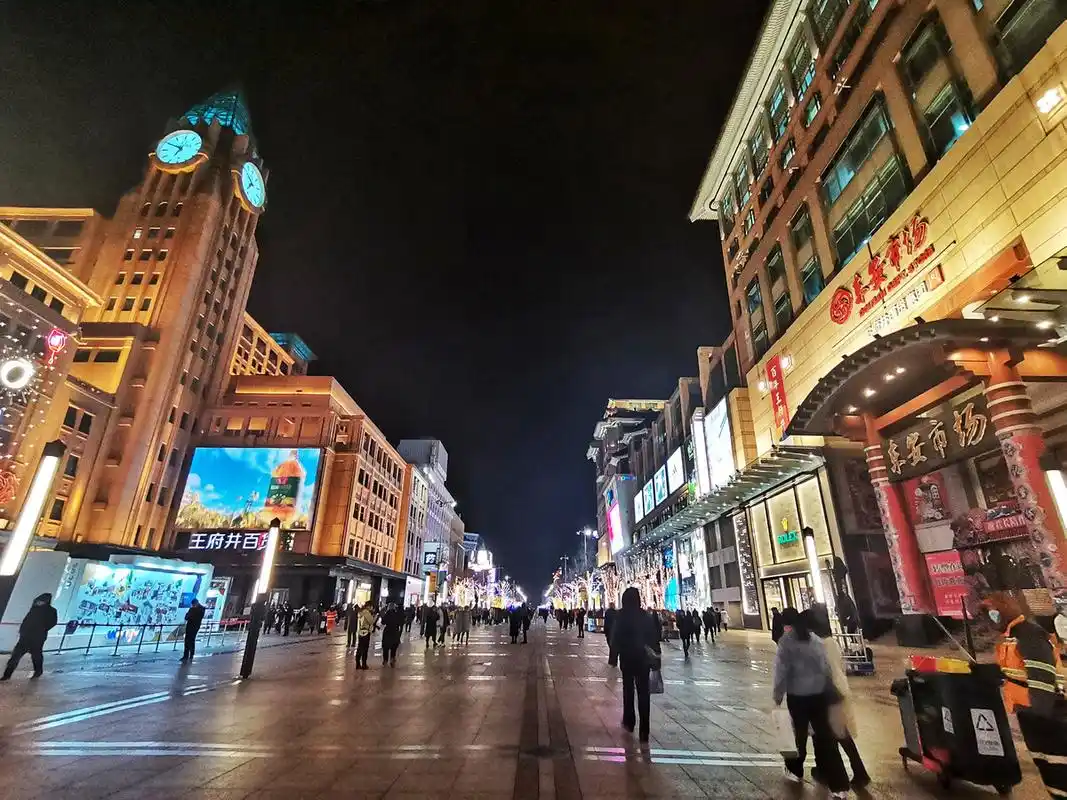
Wangfujing Street (王府井大街) in Dongcheng District, central Beijing, is one of China's oldest commercial streets, dating back more than 600 years. As described on the Beijing government: Wangfujing Dajie travel page (checked November 2026, in a 2020 China Daily reprint), it operates today as an 810-meter pedestrian shopping avenue that draws heavy crowds for international malls, historic Beijing specialty shops, and snack stalls.
Treat Wangfujing as a modern commercial promenade rather than a historic market. If your time is short, skip international fashion chains you can find at home and focus on historic specialty brands and the classic Beijing Department Store instead of overpriced souvenir stalls.
Quick Facts and Best Times to Visit
Street vendors stay out up to 11 PM, though store hours and local prices vary by merchant and season, so verify details on arrival.
| Time | Crowd Level | Notes |
|---|---|---|
| Weekday mornings | Light | Stores may just be opening |
| Weekday afternoons | Moderate | Good balance (best time) |
| Weekday evenings | Moderate-Heavy | Popular after work (best time) |
| Weekend afternoons | Very Heavy | Avoid if possible |
| Holidays | Extreme | Not recommended |
| Season | Temperature | Tips |
|---|---|---|
| Spring (Mar-May) | 10-25°C | Pleasant, occasional sandstorms |
| Summer (Jun-Aug) | 25-35°C | Hot, rainy; malls have AC |
| Autumn (Sep-Nov) | 10-25°C | Best season for visiting |
| Winter (Dec-Feb) | -10 to 5°C | Cold; dress warmly |
How to Get to Wangfujing
By Metro (Recommended)
The subway is the most reliable way to reach the street without getting stuck in central traffic. For network maps, fares, and ticketing rules, see the Beijing subway guide.
- Wangfujing Station (Lines 1 and 8): Line 8 reaches the APM Beijing side of the street.
- Dengshikou Station (Line 5): Check the in-station exit map for the best exit.
By Taxi, Didi, or Bus
If taking a taxi or booking a ride through Didi, show the driver the destination in Chinese characters: 王府井大街 (Wángfǔjǐng Dàjiē).
Reported travel times and estimated fares from major Beijing landmarks (unverified by official sources and dependent on traffic):
- Forbidden City: 10 minutes, roughly ¥15-20 (walking takes about 15 minutes and is often faster in heavy traffic)
- Beijing Railway Station: 5 minutes, roughly ¥12-15
- Sanlitun: 15 minutes, roughly ¥25-35
- Airport (PEK): 45-60 minutes, roughly ¥100-130
Street Layout and History
The name "Wangfujing" translates to "Well of the Prince's Mansion." During the Ming Dynasty (1368 to 1644), imperial princes built their mansions here around a sweet-water well that supplied the nobility. By the Qing Dynasty, merchants had turned the road into a commercial corridor, which evolved over the past century into China's premier state and retail showcase.
| Era | Development |
|---|---|
| Ming Dynasty (1400s) | Prince's mansions established |
| Qing Dynasty (1800s) | Commercial street develops |
| 1903 | First department store opens |
| 1955 | Beijing Department Store built |
| 1999 | Pedestrianized, major renovation |
| 2008 | Olympics modernization |
| 2019-2020 | Major upgrade and expansion |
Walking the avenue from north to south (or vice versa) avoids backtracking across its three sections:
- Northern Section (Goldfish Lane to Dongdan): Quieter and less crowded than the center, with traditional shops, art supplies, calligraphy stores, and local snack vendors.
- Central Section (Main Pedestrian Zone): The busiest stretch, holding flagship department stores, international retail chains, and the former Wangfujing Snack Street alley.
- Southern Section (Oriental Plaza Area): Anchored by the 850-meter Oriental Plaza complex at the southern intersection.
Where to Shop: Malls vs. Old Beijing Brands
Shopping here splits into large malls and century-old Beijing specialty stores (laozihao), all of which use fixed prices.
Major Department Stores and Malls
| Mall / Store | Type & Size | Specialties & Notes | Price Range | Best For |
|---|---|---|---|---|
| Beijing Department Store (北京百货大楼) | Traditional department store (8 floors) | Chinese brands, silk goods, traditional crafts, good-quality domestic cosmetics, household goods | Mid-range | Authentic Beijing shopping experience |
| Wangfujing Department Store (王府井百货) | Modern department store (7 floors) | Domestic Chinese labels and international brands, fashion, cosmetics, accessories | Mid to high | One-stop shopping |
| Oriental Plaza (东方广场) | Luxury mall (300+ stores, 850m indoor concourse) | Apple, Muji, Uniqlo, Zara, Louis Vuitton, Gucci, fine dining; useful for escaping summer heat or winter cold | High | Luxury shopping, upscale dining |
| APM Beijing (originally Xindong'an Plaza) | Fashion mall (6 floors) | Fast fashion, youth brands, casual drinks, entertainment rather than heritage souvenirs | Mid-range | Younger visitors, trendy items |
Historic Specialty Stores (The Best Souvenir Stops)
For genuine Beijing goods with standardized quality and no risk of counterfeit street-stall merchandise, focus on these five established stores (reported price ranges are indicative estimates; check tags in store):
- Wuyutai Tea (吴裕泰): Operating since 1887. Specializes in Beijing's signature jasmine tea, premium Dragon Well (Longjing) green tea, porcelain and Yixing clay tea sets, and tea-flavored ice cream that regularly draws a line outside. Well-packaged tea tins and boxes cost roughly ¥50 to ¥500.
- Ruifuxiang Silk (瑞蚨祥): Founded in 1893, selling genuine silk fabrics by the meter, ready-to-wear Tang suits (traditional Chinese jackets), and silk scarves priced from about ¥100 to ¥500. They can custom-make a qipao (cheongsam) in 1 to 2 days; visit on your first day in Beijing if you want fittings.
- Neiliansheng Shoes (内联升): Making handmade traditional Beijing cloth shoes and embroidered slippers since 1853, with custom fitting available. Handmade cloth shoes range from about ¥200 to ¥800 and pack light compared to fragile ceramics.
- Beijing Arts and Crafts Store (工美大厦): The safest place on the avenue for traditional decorative arts, offering certified authenticity guarantees on Beijing cloisonné (enameled metalwork, ¥50 to ¥2,000), lacquerware, Suzhou-style silk embroidery, and jade carvings and jewelry (¥200 to ¥5,000+).
- Tongrentang Pharmacy (同仁堂): China's most famous traditional medicine brand, founded in 1669, stocking herbal remedies and health supplements (roughly ¥50 to ¥500) with consultations available.
What to Skip and How to Bargain
Several categories around tourist shopping streets carry a high risk of fakes or heavy overcharging:
| Item | Reason |
|---|---|
| "Jade" from street vendors | Usually fake or low quality |
| Electronics (except Apple Store) | Better selection at Zhongguancun |
| Fake luxury goods | Illegal and poor quality |
| Scorpions/insects on sticks | Tourist trap, overpriced |
| Pearls from pushy sellers | Often fake or low quality |
| "Antiques" from shops | Mostly reproductions |
Where Bargaining Works
Bargaining is expected only at small independent souvenir shops and snack vendors. Aiming for 30% to 50% off the initial asking price is common at small souvenir shops. Review the bargaining rules before negotiating.
- Know the baseline price by checking fixed-price department stores first.
- Confirm the exact unit price before ordering, unwrapping anything, or having tea weighed out, especially at independent stalls without printed price boards.
- Open at 30% to 40% of the quoted price (or around 50% at food stalls) and negotiate upward slowly.
- Bundle multiple items with the same seller for a better discount.
- Keep the tone friendly and be ready to walk away. If the price works for the vendor, they will often call you back within five steps.
| English | Chinese | Pinyin |
|---|---|---|
| How much? | 多少钱? | Duōshao qián? |
| Too expensive | 太贵了 | Tài guì le |
| Can you lower the price? | 可以便宜一点吗? | Kěyǐ piányi yīdiǎn ma? |
| I'll give you ¥50 | 五十块 | Wǔshí kuài |
| No thank you | 不要,谢谢 | Bù yào, xièxie |
Claiming China's Departure Tax Refund on Your Purchases
China's departure tax refund scheme can cut your net cost on silk, crafts, or department store fashion. Look for participating tax-refund stores and bring your passport when shopping.

According to the Shanghai government: departure tax refund guide (checked November 2026), overseas travelers qualify when they meet three conditions:
- Spend at least 200 yuan at the same tax-refund store on the same day (consolidating gift purchases like tea tins or silk scarves into a single transaction makes this easy to reach).
- Depart the Chinese mainland within 183 days of your most recent entry.
- Depart within 90 days of the purchase date.
The refund is calculated on the VAT-inclusive invoice amount at 11% or 8%, minus a 2% handling fee, putting your actual pocketed refund at generally 9% or 6%. Refunds up to 20,000 yuan are paid in cash or by bank transfer; amounts above 20,000 yuan are paid by bank transfer only.
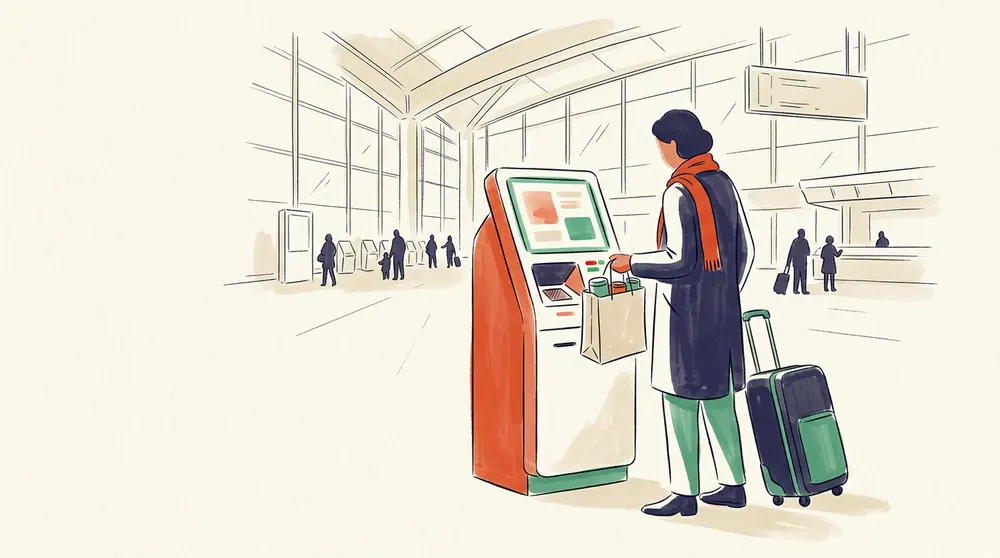
Under the State Taxation Administration: upgraded refund policy effective 1 July 2026 (checked November 2026), customs conducts random physical spot-checks on refund claims under 10,000 yuan (claims of 10,000 yuan or more are still inspected one by one), and travelers no longer need to submit paper refund forms or paper sales invoices.
If you use the "refund-upon-purchase" (instant refund) service at a participating store or via self-service tax refund machines developed by Bank of China and ICBC for shopping malls, nationwide rules checked in November 2026 give you 28 days to leave China and complete departure verification, and goods purchased in one participating region can be claimed when departing from ports in other eligible regions.
Food: Wangfujing Snack Street, Restaurants, and Better Alternatives
The Reality of Wangfujing Snack Street (王府井小吃街)
Status note (November 2026): Recent travel reports state that the old stall-style Wangfujing Snack Street has largely closed or changed. Treat the descriptions and prices below as historical context rather than a guaranteed setup today.
| Snack | Description | Price |
|---|---|---|
| Jianbing (煎饼) | Crispy crepe with egg | ¥8-15 |
| Tanghulu (糖葫芦) | Candied hawthorn berries | ¥10-15 |
| Roujiamo (肉夹馍) | Chinese "burger" | ¥12-20 |
| Lamb skewers (羊肉串) | Cumin-spiced | ¥5-10 each |
| Beijing yogurt (老北京酸奶) | In ceramic jar | ¥8-12 |
| Baozi (包子) | Steamed buns | ¥6-15 |
| Luzhu huoshao (卤煮火烧) | Stewed pork organs | ¥25-40 |
Sit-Down Restaurants, Food Courts, and Better Street Food
Eat meals at an established restaurant, mall food court, or neighborhood food street rather than at tourist stalls. For clean seating, printed picture menus, and predictable pricing, head to the Oriental Plaza basement food courts, with Chinese, Japanese, Korean, and Western casual eateries. For coffee or drinks between shops, Oriental Plaza has a Starbucks Reserve and APM Mall has Heytea (喜茶) for cheese tea.
| Restaurant | Type | Price | Best For |
|---|---|---|---|
| Quanjude | Peking Duck | ¥200-300/pp | Famous duck experience |
| Donglaishun | Hot Pot | ¥100-150/pp | Traditional lamb hot pot |
| Local baozi shops | Baozi | ¥40-60/pp | Steamed buns |
| Various noodle shops | Noodles | ¥25-50/pp | Quick, cheap, local |
For street snacks beyond Wangfujing, Nanluoguxiang (2 km north) has trendy snacks in a hutong setting, while Niujie (Muslim Quarter) (4 km southwest) is the strongest choice for authentic Beijing halal street food without the tourist-alley markup.
Nearby Attractions and Full-Day Pairing
Wangfujing works best as the second half of a central Beijing sightseeing day.
| Attraction | Distance | Time Needed |
|---|---|---|
| Forbidden City | 1 km west | 3-4 hours |
| Tiananmen Square | 1 km west | 1-2 hours |
| National Art Museum | 500m north | 1-2 hours |
| St. Joseph's Church (East Church) | 300m | 30 min |
| Jingshan Park | 1.5 km northwest | 1-2 hours |
Right on the avenue sits St. Joseph's Church (东堂 / 王府井天主堂), also called the East Church. First built in 1655 and rebuilt in 1904, this Gothic Catholic church is an active parish with free entry (wear respectful dress) and a broad forecourt.
To pair Wangfujing with the imperial sights for a full day:
- Morning: Enter the Forbidden City at 8:30 AM before the heaviest crowds build, then walk east to Wangfujing around 12:00 PM.
- Afternoon: Eat lunch in the Oriental Plaza basement at 12:30 PM, browse the department stores and specialty shops from 2:00 PM, and stop at Wuyutai at 4:00 PM.
- Evening: Walk the lit boulevard around 5:30 PM, finish shopping, and sit down for dinner at Quanjude or Donglaishun around 8:30 PM.
For help budgeting meals, transit, and tickets across your trip, see the China day-to-day cost guide.
Payments, Scams to Avoid, and Practical Tips
Paying at Stores and Stalls
While major malls and department stores accept foreign Visa and Mastercard credit cards, small shops and street vendors strongly prefer Alipay or WeChat Pay (cash is still accepted but less common now).
Set up Alipay with your home bank card before leaving for China. With a linked international card on Alipay, the transaction fee is waived on single payments of ¥200 or less and runs about 3% above ¥200. WeChat Pay linked to an international card works for merchant purchases, though it cannot send peer-to-peer transfers or red packets. Use the CNY converter to check prices on the spot (¥100 is about US$15).
Common Scams and Practical Tips
- The "Tea Ceremony" or "Art Student" Scam: Friendly, English-speaking strangers may strike up a conversation and invite you to a nearby tea house for a "traditional tea ceremony" or to an "art student exhibition," both ending with an inflated bill for mediocre tea or worthless prints. Politely decline and keep walking.
- Pickpocketing: Keep phones and wallets in front pockets in tight evening crowds.
- Restrooms: Skip street-level public toilets ("WC" signs) and use the free, clean restrooms inside Oriental Plaza or the major department stores. Carry a small pack of tissues, as paper is not always stocked in stalls.
- Drinking Water: Bring your own water bottle; street kiosk drinks carry heavy markups.
- Seasonal Sales: Department store end-of-season clothing clearance sales typically run in February and August.
Want the complete Beijing experience? The China Survival Kit includes detailed Beijing guides, payment setup, and essential phrases for shopping and dining.
FAQ
Is Wangfujing worth visiting?
Yes, if you treat it as a modern commercial promenade rather than an ancient market. Spending one to two hours visiting the historic Beijing specialty brands and seeing the street atmosphere works well when combined with the nearby Forbidden City.
Are the scorpions real?
Yes, the scorpions sold at tourist stalls were real and alive until cooked, though recent 2026 reports note the old stall-style snack street has largely changed or disappeared. Even where found, insect skewers are a novelty aimed at tourists rather than traditional everyday Chinese food.
Is bargaining acceptable?
Bargaining is only acceptable at small souvenir shops and independent street stalls. Department stores, international brand boutiques, and historic specialty shops like Wuyutai and Ruifuxiang all use fixed prices.
What is Wangfujing Street famous for?
It is Beijing's best-known pedestrian shopping street, combining large malls and department stores with century-old Beijing brands such as Tongrentang, Wuyutai, and Ruifuxiang. It also sits roughly 1 kilometer east of the Forbidden City and Tiananmen Square.
How do I get to Wangfujing Street?
Take Beijing Metro Line 1 or Line 8 to Wangfujing station, or Line 5 to Dengshikou station. Because exit layouts differ by line, check the map inside the station concourse and follow signs to the pedestrian street, and see the Beijing subway guide for transit tips.
What are the Wangfujing Street opening hours?
Most department stores and shops run from roughly 09:00 to 22:00, while some food vendors and restaurants stay open until about 23:00. Because hours vary by individual store, verify ahead of time if you are making a special trip.
Essential Apps for This Guide
All 19 apps →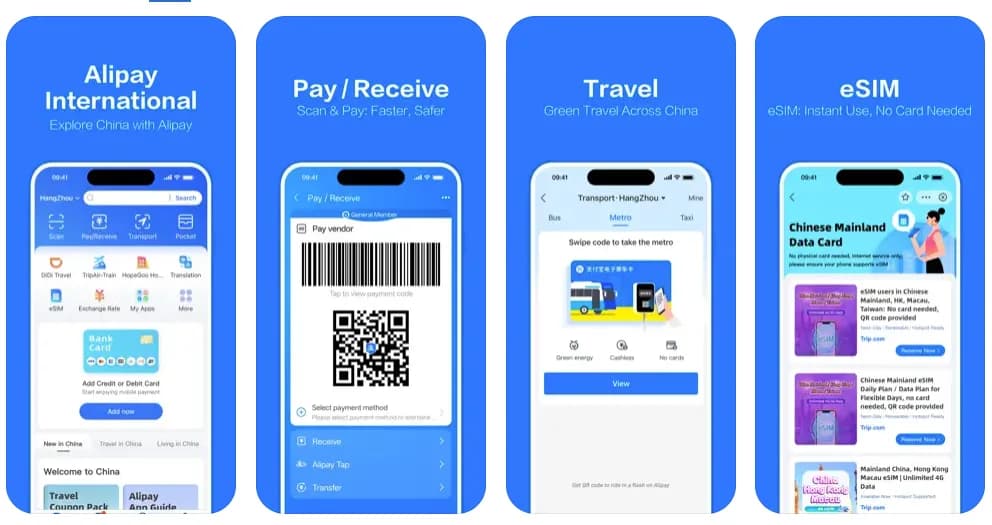

More guides like this
- Shopping & Daily LifeThe Tall Person’s Survival Guide to Shopping in China
- Shopping & Daily LifeTaobao in English: How Foreigners Use It in 2026
- Shopping & Daily LifeA Parent’s Guide to Baby Formula & Diapers in China
- Shopping & Daily LifeCan I Use My Laptop in China? Power and Voltage Guide
- Shopping & Daily LifeShipping Your Stuff Home: Mailing Parcels from China
- Shopping & Daily LifeChinese Toilets: Public Restrooms in China Explained
Rules and apps in China change often. Guides are checked against official sources — see our editorial & verification standards. Spotted something out of date? Tell us at [email protected]. Published January 4, 2026.