Wong Tai Sin Temple Hong Kong: Hours, MTR and Tips
Wong Tai Sin Temple is free and open daily 7:30am to 4:30pm, a 3-minute walk from MTR Exit B2. Directions, kau cim steps, etiquette and what to skip.
Updated 14 min readCSK Team
On this page8 sections
Quick answer: Wong Tai Sin Temple in Kowloon is free to enter and opens daily from 7:30am to 4:30pm, and until 9:00pm on the 1st and 15th of the lunar calendar (checked November 2026). Take the MTR Kwun Tong Line to Wong Tai Sin Station, exit at B2, and walk about 3 minutes. Plan 1 to 2 hours for the halls, gardens, and kau cim fortune sticks.
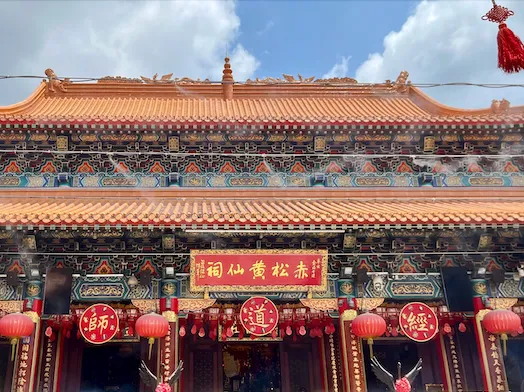
Wong Tai Sin Temple (黄大仙祠, Huáng Dàxiān Cí; Sik Sik Yuen Wong Tai Sin Temple) in Kowloon is Hong Kong's most visited Taoist temple and one of the city's primary religious sites. Known locally as the place "where wishes come true" under the motto "What you request is what you get" (有求必应), the complex draws millions of devotees and tourists each year to make offerings, ask for guidance, and practice traditional Chinese fortune telling.
What separates Wong Tai Sin from quieter historic monuments is that it functions as an active civic utility for everyday problems. Hong Kong locals come here before major decisions on jobs, business, relationships, marriage, health, and exams. You are watching religious culture in daily use rather than preserved behind glass. For a first-time visitor, the layout and crowd flow make it easy to observe rituals without hiring a guide or reading a long historical lecture. Follow the movement around the main altar, stay respectful, and you will understand about 80% of what is happening simply by watching.
History and Architecture
The temple is dedicated to the deity Wong Tai Sin (also known as Huang Daxian), a Chinese Taoist immortal believed to have the power to heal the sick and grant wishes. Unlike single-tradition shrines, the complex combines three religions under one roof: Taoism, Buddhism, and Confucianism.
According to the temple's history page, Taoist priests received guidance from Master Wong Tai Sin in April 1921 and established the main altar at Chuk Yuen in Kowloon. The charity Sik Sik Yuen, founded in 1921, still runs the complex today. Later additions around the main altar follow the five elements of Chinese feng shui (metal, wood, water, fire, and earth) and feature red pillars, golden roofs, and detailed carvings.
Opening Hours, Admission, and Costs
General entry is free, though specific halls and optional services carry separate fees.
| Detail | Information |
|---|---|
| Temple | 7:30 AM - 4:30 PM daily |
| Temple, 1st and 15th of lunar month | 7:30 AM - 9:00 PM (also reported since December 2025 by The Standard, 1 Dec 2025) |
| General Office | 8:00 AM - 4:30 PM |
| Good Wish Garden | 8:00 AM - 4:30 PM (Free admission) |
| Taisui Yuenchen Hall | 8:00 AM - 4:30 PM (Admission: HK$100; half price for people aged 65 or above and people with disabilities) |
| Taisui prayer-submission service | HK$300 |
| Admission | Free for main temple (donations welcome) |
| Fortune stick rental | About HK$2-5 (estimate, reported by visitors) |
| Fortune interpretation | About HK$30-100 (estimate, varies by stall) |
Hours and fees are listed on the Wong Tai Sin Temple official FAQ (checked 5 November 2026). Because opening times can shift for weather or major festivals, check the official website before making a special trip.
Deciding whether to pay for Taisui Yuenchen Hall or the prayer-submission service comes down to your reason for visiting. Casual sightseers and photographers have plenty to see in the free main courts and garden. Bring small bills and coins if you plan to buy incense, rent fortune sticks, or pay a fortune teller in the arcade.
Best Time to Visit and How Long to Spend
When you arrive shapes the atmosphere more than any other choice. Because the grounds are compact and busy, crowds build quickly in the middle of the day.
- Early morning (7:30 AM - 9:00 AM): The quietest window with the calmest atmosphere. Coming right at opening lets you watch locals perform morning rituals before tour groups arrive, and gives you space if you carry a tripod.
- Weekday afternoons: Noticeably fewer crowds than weekends, allowing for a relaxed walk through the halls and garden.
- Last hour before closing (arrive by 3:30 PM): Afternoon light is softer for photography, though the closing time means you must move briskly.
- 1st and 15th of each lunar month: Visiting during the extended evening hours is a vivid way to see the complex in active use by local worshippers, though you should expect heavier crowds. The English official page still lists 4:30 PM for the Good Wish Garden, General Office, and Taisui Yuenchen Hall (unconfirmed for these two dates, and the Chinese homepage may differ), so confirm on the day and visit the garden first if you arrive in the afternoon.
- Times to avoid: The first three days of Chinese New Year are the busiest period of the year, bringing extreme crowds and hour-long waits; skip them unless festive chaos is specifically what you want to see. Weekends, public holidays, and other lunar festival days are also much busier than standard weekdays.
Choosing your pace
Match your time budget to how deeply you want to engage with the rituals:
- Quick visit (30 to 45 minutes): Enough for the main halls and a brief walk past the fortune-telling arcades if your itinerary is tight.
- Standard visit (1 to 1.5 hours): Covers the main halls, photos, and a calm walk through the garden.
- Complete experience (2 hours): Adds the full kau cim stick ritual, a paid reading at the fortune interpretation stalls, and time for a snack afterward once "temple legs" set in from standing on stone tiles.
On a 2-hour visit, work in this sequence so you do not miss the garden cutoff: start with a 10-to-20-minute loop through the main halls to get your bearings, spend 15 to 25 minutes on kau cim divination at the main altar, take a 20-to-30-minute break in the Good Wish Garden behind the temple, and finish with 15 to 30 minutes at the outer arcade stalls for your reading before heading to your next stop.
How to Get There
By MTR (Recommended)
The MTR is the fastest, most reliable way to reach the gates:
- Ride the Kwun Tong Line (观塘线, the green line) to Wong Tai Sin Station.
- Leave via Exit B2, the exit specified on the temple's official site.
- Follow the signs outside the station area for about 3 minutes on foot to reach the main gate.
Travel times from major hubs are straightforward:
- From Tsim Sha Tsui: Take the Kwun Tong Line directly to Wong Tai Sin (about 15 minutes).
- From Central: Take the Tsuen Wan Line to Mong Kok, then transfer to the Kwun Tong Line (about 25 minutes).
- From Hong Kong International Airport (HKG): Take the Airport Express to Kowloon Station or Hong Kong Station, then transfer to the MTR network (45 to 60 minutes total depending on transfers).
- From Shenzhen (day trip): Crossing the border via Lo Wu or Lok Ma Chau connects to the MTR network, reaching Wong Tai Sin in about 45 to 70 minutes depending on border queues and routing.
For fare payment, an Octopus card is the easiest tap-in, tap-out method across Hong Kong transport. Contactless bank cards work at many gates, but an Octopus card remains the most reliable option everywhere. If you are travelling with a wheelchair or stroller, check the accessibility page on the temple's official website along with the MTR station map before setting out. For broader cross-border transit logistics, see our Hong Kong vs mainland China guide.
By Taxi
Taking a taxi makes sense if you are travelling in a small group or connecting directly to nearby sights in Kowloon. Tell the driver "Wong Tai Sin Temple" or show the Chinese characters: 黄大仙祠.
Rough fare estimates (not checked against current meter tariffs) run about HK$50 to HK$80 from most parts of Kowloon, and about HK$150 to HK$200 from Hong Kong Island.
Visiting on a 240-Hour China Transit
Travelers piecing together a regional trip often miss that you can sometimes combine mainland China transit time with a stop in Hong Kong. Because Hong Kong operates separate immigration controls from mainland China, your mainland visa or transit status is separate from your entry permission for Hong Kong.
If you qualify for the 240-hour visa-free transit in Guangdong (covering the Guangzhou and Shenzhen region), you can potentially enter Guangdong, cross into Hong Kong to visit places like Wong Tai Sin, and then fly onward to a third destination. Exact eligibility depends on your passport and ticket routing, so treat this as a routing framework rather than a guaranteed entry rule. For full policy rules, start with our guide to the China 240-hour visa-free transit.
What to Do at Wong Tai Sin Temple
1. Fortune Stick Divination (求签 Kau Cim)
Wong Tai Sin is Hong Kong's premier venue for kau cim (求签), where locals believe the readings are exceptionally accurate. Watching or participating is the centerpiece of a visit.
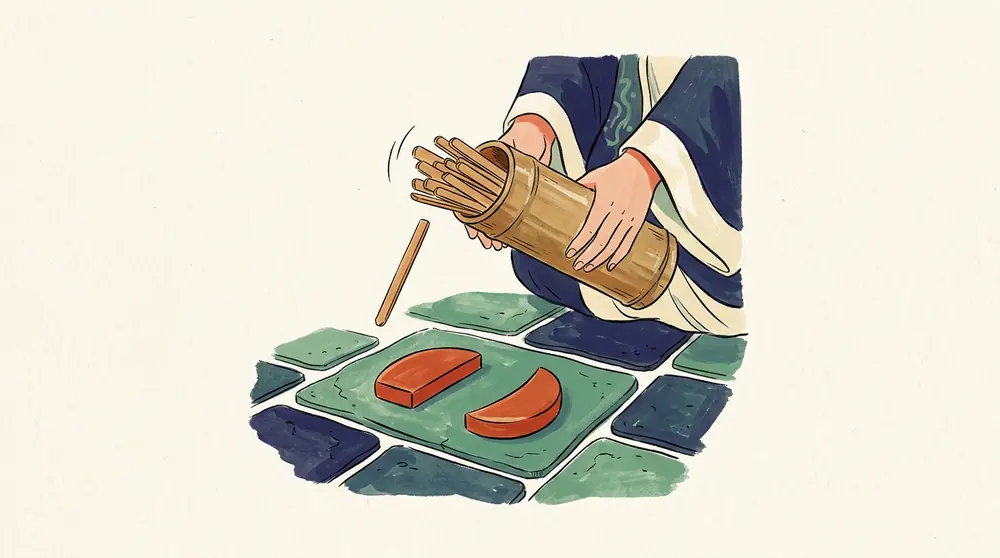
If you want to try the ritual yourself, follow the sequence locals use:
- Get fortune sticks: Rent or purchase a bamboo cylinder holding numbered sticks (签筒) from vendors near the main altar.
- Kneel at the altar: Find an open spot at the kneeling cushions in front of the main altar.
- Ask a specific question: Silently introduce yourself to Wong Tai Sin with your name, birthdate, and address, then state one clear question in your mind. The ritual works best when you ask a concrete question such as "Should I accept this job offer?" rather than a vague wish like "Will I be happy?"
- Shake the container: Hold the bamboo cylinder at roughly a 45-degree angle while kneeling and shake it gently until a single stick drops out. Look at the number written on that stick.
- Confirm with divination blocks: Pick up two crescent-shaped divination blocks (圣杯) and drop them on the ground to verify that the stick is your intended answer. One flat side up and one curved side up means "yes," confirming your number. If both blocks land the same way up, the answer is not confirmed and you need to try again.
- Have the number interpreted: Remember or write down your stick number, return the equipment, and take the number to the interpretation stalls in the outer arcade.
Understanding your fortune rating
Every numbered stick corresponds to a traditional text graded on a five-tier scale from highly auspicious to difficult:
| Rating | Meaning |
|---|---|
| 上上签 (Upper-upper) | Extremely auspicious |
| 上签 (Upper) | Good fortune |
| 中签 (Middle) | Neutral, proceed carefully |
| 下签 (Lower) | Challenges ahead, be cautious |
| 下下签 (Lower-lower) | Difficult period, wait for better timing |
Locals treat these ratings as practical guidance on timing and caution rather than fixed fate. A lower stick is typically read as advice to wait or prepare carefully rather than panic.
2. Browse the Fortune Teller Arcade
Outside the main courtyard, a covered arcade houses dozens of independent stalls where professional readers interpret kau cim numbers (in Cantonese, Mandarin, or English) and offer broader consultations:
- Palm reading
- Face reading
- Birth chart analysis (八字)
- Feng shui consultations
Stalls that serve foreign visitors display "English" signs outside, though English-speaking readers may charge slightly higher rates than Cantonese-only stalls. Treat kau cim as a cultural consultation, neither guaranteed prophecy nor an automatic scam: pay for a single basic interpretation first, and walk away if a vendor tries to aggressively upsell you into a pricey "special cleansing package."
3. Make Offerings and Wishes
Even if you skip the fortune sticks, you can take part in or observe traditional offerings. According to the official FAQ, the temple instructs visitors to offer one stroke of incense consisting of three sticks, advises against burning large quantities of incense, and states that it provides no offerings for commercial use.
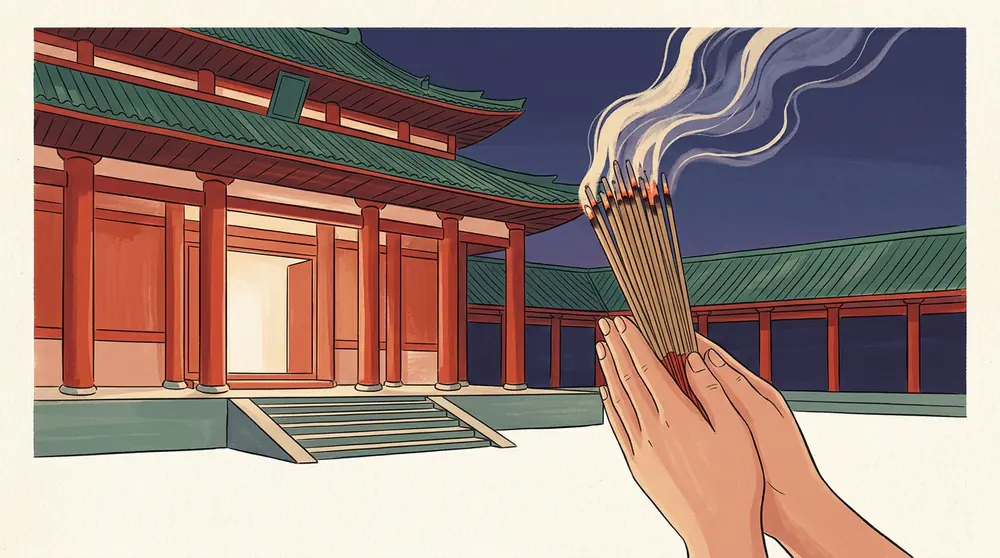
Vendor prices near the grounds are rough estimates:
- Incense: Sold by approved vendors outside the temple for roughly HK$10 to HK$30. Light your three sticks exclusively in designated lighting zones and bow three times before the main altar.
- Paper offerings and fruit: Joss paper, ceremonial items, and fruit or food offerings are also brought by devotees.
Worshippers keep their silent wishes sincere and specific, and many locals return later to thank Wong Tai Sin once a request has been fulfilled.
4. Walk Through the Good Wish Garden
Directly behind the main temple halls sits the Good Wish Garden (从心苑), a quiet traditional Chinese garden arranged with ornamental ponds, bridges, pavilions, and rock formations. It serves as a welcome acoustic break from the crowded incense courts out front.
Temple Etiquette, Dress Code, and Photography
Because Wong Tai Sin is a working place of worship rather than a theme park, small courtesies keep you out of the way of people who are praying. Before your trip, you can also review our broader temple etiquette guide.
Dress code and what to pack
Hong Kong street style is casual, but temple halls call for basic modesty. Wearing clothes that cover your shoulders and knees is the safest default, and skipping gym tanks or loud outfits helps you blend in respectfully.
In summer, pack a light layer alongside your water bottle and umbrella: moving between icy air-conditioned MTR carriages and humid outdoor courtyards is a constant Hong Kong contrast. Most importantly, wear comfortable flat shoes. Between hard temple tiles, standing at the altar, and waiting in queues, heels will quickly make the visit miserable.
Rules inside the complex
Follow the local flow and observe for a moment before stepping up to an altar:
- Thresholds and hats: Step completely over the raised wooden or stone threshold at temple doorways (never step directly on it), and take off hats when entering buildings.
- Quiet and space: Keep your voice down, do not play music, and never block worshippers who are kneeling or praying.
- Altars and statues: Never point directly at statues or religious objects, and do not touch altar items or offerings.
- Food and smoking: Do not bring food or drinks inside temple buildings, and do not smoke anywhere in the complex.
- Handling incense safely: Hold burning incense steady rather than waving it around in tight crowds where glowing tips can burn clothing or skin. If you want to avoid heavy smoke getting into your clothes, stand upwind of the censers and do not linger in the densest smoke lanes.
Photography guidelines
Outdoor photography is generally fine if you treat active ritual spaces the way you would treat a church service:
- No close-ups of worshippers: Never photograph people while they are praying, and ask permission before taking photos of fortune tellers in the arcade.
- No flash indoors: Turn off camera flash inside all temple buildings.
- Keep lanes clear: Do not stop in doorways or incense paths to frame a shot, and restrict tripod use to quiet early-morning hours so you do not trip or obstruct crowds.
Nearby Attractions to Pair With Your Visit
Wong Tai Sin pairs well with other stops in northern Kowloon or along the Kwun Tong Line:
- Chi Lin Nunnery and Nan Lian Garden (about 15 minutes by taxi): The easiest and most rewarding half-day pairing. Chi Lin Nunnery is a Buddhist temple complex built entirely without nails, sitting right beside the Tang Dynasty-style Nan Lian Garden. Both are free to enter and offer a calm, manicured contrast to the busy incense courts at Wong Tai Sin.
- Lion Rock Country Park (30-minute hike start nearby): If you want outdoor views after the temple, the trailhead for the famous Lion Rock hike starts nearby and leads to panoramic views over Hong Kong.
- Tsim Sha Tsui harbourfront: Easily spend the morning at the temple and the late afternoon or evening walking the harbourfront; see our Avenue of Stars guide to plan that half of the day.
FAQ
Is Wong Tai Sin Temple free?
Yes, general entry to the main temple complex and the Good Wish Garden is free. You only pay if you choose to enter Taisui Yuenchen Hall (HK$100, or half price for seniors aged 65+ and people with disabilities), use the HK$300 Taisui prayer-submission service, or buy incense, fortune stick rentals, and arcade readings.
Do I need to book tickets or reserve a time slot?
No booking or time slot reservation is required. You simply walk in during opening hours, though busy weekends and lunar holidays can bring slow-moving crowds at the main altar.
Can I do fortune telling in English?
Often yes, depending on the individual stall in the fortune teller arcade. Look for booths displaying "English" signs outside, and expect to pay slightly more for an English interpretation.
What are the Wong Tai Sin Temple opening hours?
The main temple opens daily from 7:30am to 4:30pm, and extends its hours to 7:30am to 9:00pm on the 1st and 15th days of the lunar calendar (Wong Tai Sin Temple official FAQ, checked November 2026). Inside the grounds, the Good Wish Garden, General Office, and Taisui Yuenchen Hall open daily from 8:00am to 4:30pm.
Which MTR exit is closest to Wong Tai Sin Temple?
Use Exit B2 at Wong Tai Sin Station on the Kwun Tong Line. The main temple gate is about a 3-minute signposted walk from the station exit.
Is it kid-friendly?
Yes, the temple is a safe public space suitable for families. Keep children close in crowded courtyards around burning incense and remind them to stay quiet near people who are praying.
What’s the best nearby combo stop?
Pair Wong Tai Sin with Chi Lin Nunnery and Nan Lian Garden, about 15 minutes away by taxi. Both are free and give you a quiet, classical garden and wooden Buddhist complex without crossing the city.
Planning your Hong Kong or China trip? The China Survival Kit has guides for transportation, payments, and daily life. Browse our directory for more destination recommendations.
More guides like this
- DestinationsHong Kong Palace Museum: Tickets, Hours & Visitor Guide (2026)
- DestinationsHong Kong to Shenzhen Day Trip: Food & Border Tips (2026)
- DestinationsChengdu Panda Base 2026: Tickets (¥55), Hours & Tips
- DestinationsAvenue of Stars Hong Kong: Complete 2026 Visitor Guide
- DestinationsXiaoqikong Scenic Area Guizhou: Complete Visitor Guide (2026)
- DestinationsYangtze River Cruise: Routes, Seasons, Ships, Prices (2026)
Rules and apps in China change often. Spotted something out of date? Tell us at [email protected]. Published January 8, 2026.