ATMs in China With Foreign Cards: Banks, Fees and Limits
Yes, ATMs in China take foreign cards that show your network logo. Per-withdrawal limit is usually ¥3,000. See which banks work, fees and fixes.
Updated 6 min readCSK Team
On this page9 sections
Quick answer: Yes, many ATMs in China give out yuan to foreign cards, but only machines showing your card's network logo (Visa, Mastercard, Plus, Cirrus, UnionPay and others). The Shanghai government says withdrawals with overseas cards are generally limited to ¥3,000 (about US$450) per transaction. Your own bank adds fees, so withdraw larger amounts less often.
Here's how to withdraw cash in China with your international card.
Which ATMs Accept Foreign Cards
Best Banks for Foreign Cards
Most reliable:
These banks are commonly recommended for foreign cards. We have no official acceptance figures, so check the logos on each machine.
| Bank | Notes |
|---|---|
| Bank of China (中国银行) | Often recommended for foreigners |
| ICBC (工商银行) | Very large network, good coverage |
| China Construction Bank (建设银行) | Usually works |
| Agricultural Bank (农业银行) | Sometimes works |
| HSBC | Limited locations |
| Citibank | Limited locations |
Where to Find These ATMs
Bank of China:
- Near tourist attractions
- Airport terminals
- Major train stations
- Hotel areas
ICBC:
- Everywhere—most branches in China
- Shopping areas
- Business districts
Look for:
- International card logos (Visa, Mastercard, UnionPay)
- "Foreign Card" or "International Card" signs
- Larger bank branches (more likely to have international ATMs)
What to Look For on ATM
Check for these logos on the machine:
- VISA
- Mastercard
- Plus
- Cirrus
- American Express (less common)
If you only see "银联" (UnionPay), it may not accept foreign cards.
Withdrawal Process
Step by Step
- Insert card
- Select "English" language
- Enter PIN
- Select "Withdrawal"
- Choose account (usually "Savings" or "Checking")
- Enter amount
- Take cash (RMB)
- Take card and receipt
Currency Notes
- Dispenses Chinese Yuan (RMB)
- ¥100 notes are common, but some ATMs may also give ¥50 notes
- You may need smaller bills for daily use (break at stores)
Fees and Limits
Typical Fees
Your bank's fee: Many banks charge a flat fee or a percentage per foreign ATM withdrawal, plus a currency conversion fee. Check your own bank's schedule before you travel, and ask whether it refunds ATM fees.
The Chinese bank's fee: Some ATMs add their own fee for foreign cards. The machine should show it before you confirm. Cancel if you do not like it.
Exchange rate: Visa and Mastercard use their own network rates, which are usually better than airport exchange counters. Rule of thumb: ¥100 is about US$15.
Withdrawal Limits
The Shanghai government payment guide says ATM withdrawals with overseas cards are generally subject to a ¥3,000 per-transaction limit. Some ATMs add restrictions, and your own bank may set daily or monthly limits.
| Limit Type | Amount |
|---|---|
| Per transaction | Generally ¥3,000 (about US$450) |
| Daily and monthly | Set by your bank and the ATM. Check with your issuer |
Tip: If you need more, make multiple transactions (accepting multiple fees) or use different cards.
Common Problems
Card Declined
Possible reasons:
- Bank blocked "suspicious" foreign transaction
- Wrong ATM (doesn't accept foreign cards)
- Daily limit reached
- Card not activated for international use
Solutions:
- Call bank before travel (notify them)
- Try different ATM
- Try smaller amount
- Wait until next day (limit reset)
- Contact your bank
ATM Eats Card
Rare but happens:
- Note which ATM and time
- Contact bank branch (may require waiting)
- Report to your card issuer
- Have backup payment method
Wrong PIN
Usually 3 attempts before lockout:
- Be certain of your PIN
- Some cards use different PIN abroad
- Contact issuer if locked out
Tips for Success
Before Your Trip
- Notify your bank you're traveling to China
- Confirm international ATM access is enabled
- Know your PIN (some have separate international PIN)
- Check daily limits and foreign transaction fees
- Have backup cards from different issuers
In China
- Use bank branch ATMs (not convenience store ATMs)
- Withdraw during bank hours (if card stuck, get help)
- Get enough but not too much (balance fees vs carrying cash)
- Keep receipts for records
- Have backup payment (Alipay, credit card)
Best Practice
Withdraw larger amounts less frequently:
- ¥2,000-3,000 at a time
- Reduces total fees
- 2-3 withdrawals might cover a 2-week trip
- Store cash securely
How Much Cash Do You Need?
Mobile Payment Reality
Mobile payment is everywhere:
- Most places accept Alipay and WeChat Pay
- Street vendors often prefer mobile
- Cash is legal tender, but some small vendors are reluctant
- Cash is still a useful backup
When You Need Cash
- Some taxis (though Didi is better)
- Small rural areas
- Some markets
- Tips (hotel porters at international hotels)
- Emergency backup
- Places that don't accept foreign cards
Suggested Cash
| Trip Length | Cash to Carry |
|---|---|
| 1 week | ¥500-1,000 |
| 2 weeks | ¥1,000-2,000 |
| 1 month | ¥2,000-3,000 |
Assuming: You have Alipay set up as primary payment.
If Cash-Only Travel
Without mobile payment, you'll need more:
- ¥200-400 per day
- Withdraw more frequently
- More fee costs
Alternatives to ATMs
Airport Exchange
- Available at all international airports
- Rates are usually worse than the card network rate
- Convenient for immediate cash
- Exchange small amount only
Hotel Exchange
Some hotels exchange:
- Usually poor rates
- Convenient if desperate
- Limited availability
Bank Exchange
Go to a bank with passport:
- Rates are usually better than the airport
- Requires passport
- Limited hours
- Process takes time
Alipay (Best Alternative)
Set up Alipay with international card:
- No ATM needed
- Widely accepted
- Spend via QR codes
See our Alipay setup guide, Alipay vs WeChat Pay and currency exchange tips. To convert amounts, use the CNY converter.
Troubleshooting Checklist
If ATM declines your card:
- Did you notify bank about China travel?
- Is international access enabled?
- Are you using a compatible ATM (Bank of China, ICBC)?
- Is it the right ATM (shows Visa/Mastercard logos)?
- Have you reached daily limit?
- Is your card expired?
- Correct PIN?
Still not working:
- Try different ATM (same bank, different location)
- Try different bank
- Try smaller amount
- Call your bank (from hotel WiFi)
- Use backup card
- Use Alipay/WeChat Pay as alternative
FAQ
Can foreign cards be used at ATMs in China?
Yes, at ATMs that show your card's network logo. The Shanghai government says overseas cards can withdraw yuan at ATMs displaying the matching logos, generally up to ¥3,000 per transaction.
Which ATMs in China accept foreign cards?
Bank of China, ICBC and China Construction Bank machines are commonly used by travelers. Look for Visa, Mastercard, Plus, Cirrus or UnionPay logos. If only 银联 (UnionPay) shows, it may not take your card.
What is the ATM withdrawal limit for foreign cards?
Generally ¥3,000 per transaction, per the Shanghai government guide. Your bank may set daily or monthly caps on top.
Should I use ATMs or Alipay in China?
Use Alipay or WeChat Pay for most spending, and an ATM for a small cash reserve. See can I use my debit card in China.
Why was my card declined at a Chinese ATM?
Common causes are a bank fraud block, a machine that does not support your network, a per-transaction limit, or international use switched off. Call your bank and try another machine.
Need help with money in China? The China Survival Kit includes payment setup guides, currency tips, and backup solutions.
Essential Apps for This Guide
All 19 apps →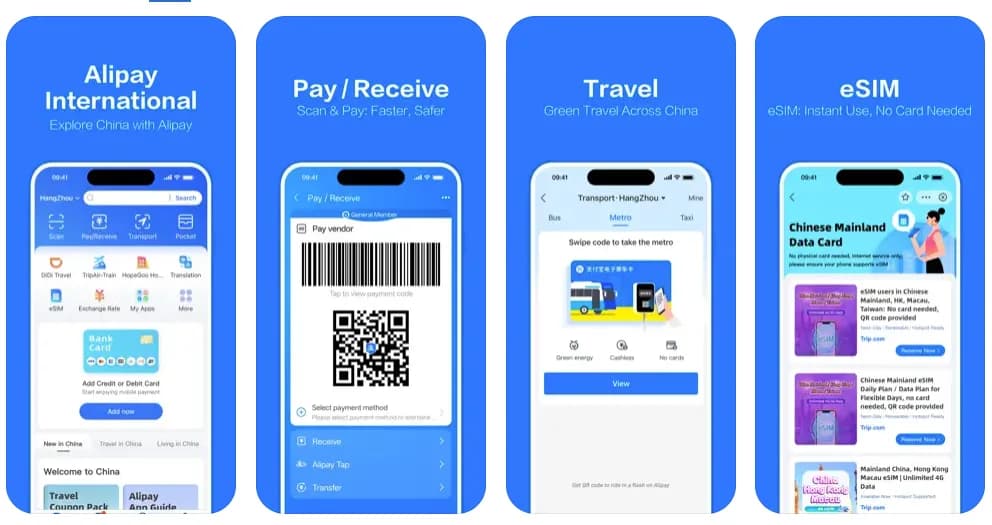
More guides like this
- Money & PaymentsAlipay Setup for Foreigners: Link a Foreign Card in 2026
- Money & PaymentsAlipay vs WeChat Pay for Foreigners: Which to Use in 2026
- Money & PaymentsHow to Bargain in China: Negotiating Prices Like a Local
- Money & PaymentsCan I Use My Debit Card in China? Where It Works in 2026
- Money & PaymentsMoving Money In & Out of China for Expats & Nomads
- Money & PaymentsCan I Access Online Banking in China? What's Blocked
Rules and apps in China change often. Guides are checked against official sources — see our editorial & verification standards. Spotted something out of date? Tell us at [email protected]. Published December 8, 2025.