Best VPN for China 2026: What Providers and Travelers Say
No VPN is guaranteed in China. Astrill, ExpressVPN, NordVPN and Surfshark compared on China notes and prices checked 5 Nov 2026, plus when an eSIM is enough.
Updated 12 min readCSK Team
On this page11 sections
Quick answer: No VPN works in China every day. Recent traveler reports most often name Astrill, then ExpressVPN, as the ones that still connect, while NordVPN's help pages say its iOS app is blocked in China. Install two options before you fly, test them on arrival, and consider a travel eSIM that routes data abroad, which may make a VPN unnecessary on your phone.
This page has no VPN affiliate links yet; official sites are linked as plain URLs.
How to evaluate a VPN for China
We do not run connection tests on this page. Instead, the picks below weigh three sources of evidence: what each provider states on its own site about China (checked November 2026), published prices read on 5 November 2026, and what recent travelers report on forums and in 2026 independent guides. Treat traveler reports as anecdotes rather than guarantees. China adjusts its filtering often, and the same VPN can work in Shanghai on Monday and fail in Chengdu on Friday.
To separate marketing claims from practical tools, apply five criteria in order:
- Can you install and configure it before you fly? This is non-negotiable. Once you land on a filtered network, downloading installers or reading help pages becomes much harder.
- Does the provider acknowledge China and publish working instructions for it? A company that maintains a dedicated China status page gives you a playbook when connections drop.
- Does it offer obfuscation? Standard VPN traffic is easy for a firewall to recognize. Obfuscation disguises VPN traffic as ordinary web traffic, which matters when standard protocols are blocked.
- Do recent travelers report it connecting? Features on paper mean little if recent forum threads report constant failures.
- How do the price, device limits, and refund rules fit your trip length? Because no single service is reliable every day, paying for a plan with no refund carries real financial risk if it fails on arrival.
Providers compared
Prices below come from each provider's pricing page on 5 November 2026, with Astrill's pricing and refund policies checked November 2026. Headline rates are promotional figures that often renew higher. Yuan figures use an estimate of about ¥6.7 per US$1. Because providers change promotional pricing, plan tiers, and refund conditions frequently, check the official pricing and terms pages before paying.
| VPN | China note from the provider | Price seen | Refund |
|---|---|---|---|
| Astrill | Lists StealthVPN, OpenWeb, OpenVPN and WireGuard | US$30 a month, US$15 a month on a 1-year plan (US$180), US$12.50 a month on a 2-year plan (US$300) | None (all web sales final) |
| ExpressVPN | Has a "Can't connect to ExpressVPN in China" support page, last updated 4 Feb 2026, and applies obfuscation automatically | From US$2.99 a month on a 2-year plan (Basic), renewing at US$99.95 a year | 30 days |
| NordVPN | Its help center says the iOS app is fully blocked in China and gives a manual IKEv2 setup | From US$3.49 a month on a 2-year plan (Basic) | 30 days |
| Surfshark | Offers NoBorders and Camouflage Mode. NoBorders suggests servers for restricted networks | From US$2.19 a month on a 2-year plan | 30 days |
Astrill stands out for its cost and strict terms: US$30 for a single month is about ¥200, while a 2-year plan at US$12.50 a month works out to about ¥84 a month. More importantly, Astrill refund policy rules state that all web sales are final and refunds are not possible once a purchase is made. For a one- or two-week trip, trying Astrill is a paid commitment with no money-back fallback, which is why the provider suggests buying the shortest plan to test it.
What recent travelers report
In June 2026 threads on r/traveltochinamainland, r/chinalife and r/travelchina, Astrill was the most commonly recommended paid VPN, while ExpressVPN was described as hit or miss depending on the week. Travelers in those threads also mentioned LetsVPN and Mullvad. One returning traveler on r/chinatravel reported that two budget apps worked "sufficiently" but dropped for an hour or two at unpredictable times.
Independent review sites from September to November 2026 report that a spring 2026 order to Chinese network providers made every VPN less dependable. Those guides describe ExpressVPN as working most of the time, though less predictably than before. Keep in mind that independent review sites are secondary sources and some earn commission from VPN sales, so weigh their praise carefully.
The practical takeaway comes down to risk management. Astrill is the safest bet based on report volume, though you pay upfront with no refund option. ExpressVPN is a common second choice backed by a 30-day refund window. NordVPN's own warning about its blocked iOS app makes it a poor first pick unless you already subscribe and are comfortable configuring a manual IKEv2 setup before departure. Surfshark builds in China-specific features at a low price, but we found fewer recent traveler reports to confirm how well it holds up in practice.
The four providers in more detail
Astrill
On the Astrill pricing page (checked November 2026), one account covers unlimited household devices across all pricing tiers and includes OpenVPN, StealthVPN, OpenWeb and WireGuard. Traveler reports in 2026 put Astrill first for video and maps, though those accounts come from forum posts rather than controlled tests. By most accounts its interface is dated, so install and configure it at home where you can read the protocol options without time pressure.
ExpressVPN
ExpressVPN does not promise uninterrupted access in China, but it actively maintains an ExpressVPN: connecting in China status page (update stamped 4 Feb 2026, checked November 2026) and applies obfuscation automatically. Rather than leaving users to guess which settings work, that page gives a clear sequence: update the app first, then try other protocols in the order shown in its table. It lists Basic, Advanced and Pro plans covering 10, 12 and 14 simultaneous devices, backed by a 30-day money-back guarantee for new users. Watch the billing terms: the low US$2.99 monthly headline rate requires a 2-year Basic plan (a 28-month deal) that renews at US$99.95 a year.
NordVPN
NordVPN is direct about its limitations. Its support documentation on NordVPN: China on iOS (checked November 2026) states that the iOS app is fully blocked in China. Instead of the standard app connection, it provides a manual IKEv2/IPsec setup that requires downloading a root certificate in Safari and entering a server IP alongside a matching hostname. Because standard app connections fail on iOS and manual configuration takes careful preparation, NordVPN is hard to recommend as a new purchase specifically for China. If you already pay for a subscription, set up the manual profile and download the certificate at home before you leave.
Surfshark
Surfshark includes two tools designed for restricted networks: NoBorders, which suggests servers suited to network restrictions, and Camouflage Mode, which disguises VPN traffic. One technical catch matters during troubleshooting: Camouflage Mode works only when you select the OpenVPN protocol. Surfshark has the lowest headline price in this comparison (from US$2.19 a month on a 2-year plan) and places no limit on simultaneous devices. The trade-off is evidence: we found fewer recent traveler reports for Surfshark in China than for Astrill or ExpressVPN, making it a budget alternative best paired with a reliable backup.
Which VPN fits which traveler
Choosing between an eSIM, a refundable VPN, or Astrill depends on whether you travel with a laptop, how long you stay, and how much downtime you can tolerate.
| Traveler | Suggested approach | Why |
|---|---|---|
| 1 to 2 week tourist, phone only | Travel eSIM first, one VPN as backup | The eSIM may cover Google and WhatsApp with no setup. See best eSIM for China |
| Laptop user, hotel Wi-Fi, remote work | Astrill or ExpressVPN, installed on laptop and phone | Hotel Wi-Fi and laptops are filtered, and an eSIM does not help a laptop unless you tether |
| Budget traveler | Surfshark 2-year plan or a short plan of a provider with a 30-day refund | Cheapest per month, and the refund window limits the risk |
| Stay of a month or more | Two VPNs from different providers | If one is blocked, the other may work |
| Business trip with a work VPN | Ask your IT team before you go | Your employer's VPN may need its own setup |
Why a travel eSIM may replace a VPN
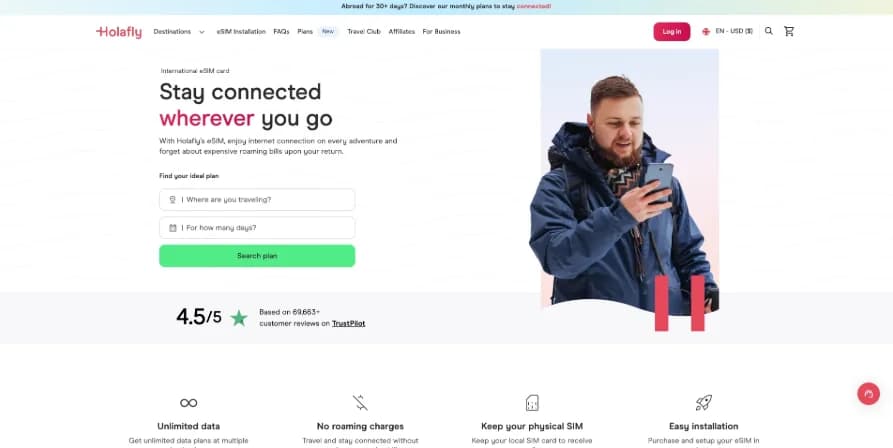
A local Chinese SIM and hotel Wi-Fi route your traffic directly through mainland networks and the firewall. By contrast, many travel eSIMs and home-carrier roaming plans connect to a local Chinese tower while routing your data out through a gateway abroad. Airalo states that its eSIM data routes outside mainland China (checked November 2026), so no VPN is needed while using eSIM data, though that protection does not extend to hotel Wi-Fi. Sources say foreign routing usually lets Google and WhatsApp load without a VPN, while warning that routing depends on the provider and should be tested on arrival. We cover specific providers in the best eSIM for China guide and the US carrier roaming guide.
The main limitation of an eSIM is hardware. An eSIM only covers the phone it is installed on. If you bring a laptop and connect it directly to hotel Wi-Fi, your laptop traffic hits the firewall regardless of what is on your phone. To get a laptop online, you either need a working VPN installed on the computer or you must tether the laptop to your phone's eSIM data. If you plan to tether, check your eSIM plan's hotspot rules and data allowance before relying on it for work.
Cost over a trip
Using the prices read on 5 November 2026 and an exchange rate of about ¥6.7 per US$1 as estimates only, the financial trade-off shifts sharply once your trip exceeds two weeks.
| Trip length | Cheapest route | Rough cost |
|---|---|---|
| 1 week | Plan from a provider with a 30-day refund, cancelled after the trip | The full first-term price at checkout, less any refund (note: Astrill has no refunds) |
| 2 weeks | Same 30-day refundable provider, or an eSIM that routes abroad | A few US dollars to US$50 |
| 1 month | Astrill 1-month plan (non-refundable), or a plan from a provider with a 30-day refund | US$30 (about ¥200) for Astrill |
| 3 months or more | A 1-year or 2-year plan | Astrill US$180 a year (about ¥1,200) |
Refund rules differ across providers and usually carry specific conditions, so read the cancellation terms before you pay.

Install before you fly
VPN websites and app stores are blocked or limited inside China. Starting a download or hunting for configuration files after you land on airport or hotel Wi-Fi may fail completely. Complete your setup at home in this order:
- Check which apps you actually need. Use the firewall checker to see which of your daily services require a VPN or foreign-routed eSIM.
- Buy your plan and verify the refund rules.
- Install the app on every device you will bring. Put it on your phone, tablet, and laptop even if you think you will mostly use one screen.
- Sign in on each device and connect once. Logging in at home ensures your account credentials and connection profiles are cached locally before you hit a restricted network.
- Bookmark and save the provider's China status page offline. ExpressVPN explicitly advises users to bookmark its China page, and both ExpressVPN and NordVPN publish dedicated troubleshooting steps that you cannot easily search for once blocked.
- Download manual setup files and certificates in advance. If you rely on a manual workaround such as NordVPN's iOS IKEv2 setup, save the required certificate, server IP, and hostname before departure, as you cannot easily fetch them over filtered hotel Wi-Fi.
- Set up a backup on a second channel. Subscribe to a second VPN from a different provider, or install a travel eSIM before departure.
If you land without a working VPN, a roaming SIM or a travel eSIM that routes data outside mainland China can sometimes reach provider websites to pull down an installer. Do not rely on hotel Wi-Fi to rescue an unprepared device.

What to do when a connection drops
Even the best-prepared setup can stop connecting mid-trip, especially around sensitive political dates when some traveler guides say filtering tightens. When your VPN fails to connect, work through these steps systematically rather than reinstalling from scratch:
- Update the app first. ExpressVPN's China page puts updating the app at step one. For Android users, ExpressVPN advises installing the latest APK downloaded directly from portal.expressvpn.com/setup, noting there is no need to uninstall the existing app first.
- Work through protocols in order. Do not leave the app stuck on a single default if it times out. ExpressVPN instructs users to try other protocols in the order of the table on its support page.
- Check protocol-specific obfuscation settings. Turn on obfuscation, NoBorders, or Camouflage Mode where your provider offers them. Remember that Surfshark's Camouflage Mode functions only when the protocol is set to OpenVPN.
- Switch between Wi-Fi and mobile data. A protocol that fails on a hotel's local network may connect over mobile data, or the reverse.
- Avoid desperation downloads of free VPN apps. Free services still need to earn money somehow, so read the privacy policy carefully before routing your traffic through an unknown free tool.
Legal status and Wi-Fi safety
According to UK FCDO China safety and security advice (checked November 2026), China's cybersecurity laws state that online products and services such as VPNs must be licensed by the Chinese government. The UK Foreign Office guidance repeats this requirement for visitors, though it does not state how the rule is applied to tourists in practice. Check your own embassy's current travel advice before your trip and decide for yourself; we do not advise anyone to break a law.
Beyond overcoming blocks, consider basic connection security. Free hotel and airport Wi-Fi is open to local snooping. While a working VPN protects your traffic from local interception, you should still understand how local networks operate; see public Wi-Fi safety in China for precautions when your VPN is off. If you prefer to rely on domestic tools that work without crossing the firewall, see DeepSeek and China AI apps.
FAQ
What is the best VPN for China?
No VPN is reliable every day. Recent traveler reports most often name Astrill, then ExpressVPN. Carry a backup, and install before you fly.
Does ExpressVPN work in China in 2026?
Reports say it usually does but less predictably than before. ExpressVPN publishes a China troubleshooting page, and does not promise it.
Does NordVPN work in China?
NordVPN's help center says its iOS app is fully blocked in China and gives a manual IKEv2/IPsec setup using a downloaded root certificate, server IP, and matching hostname.
Do I need a VPN if I have a travel eSIM?
Often not on your phone, if the eSIM routes data abroad rather than through mainland China, though you still need a solution on hotel Wi-Fi. Test Google and WhatsApp on arrival, and keep a VPN as a backup.
Can I download a VPN after I arrive in China?
It is risky. VPN sites and app stores can be blocked. Install it before you fly.
Is it legal to use a VPN in China?
China's cybersecurity laws say VPN services must be licensed by the Chinese government, and visitors should check their embassy's travel advice. We cannot give legal advice.
Essential Apps for This Guide
All 19 apps →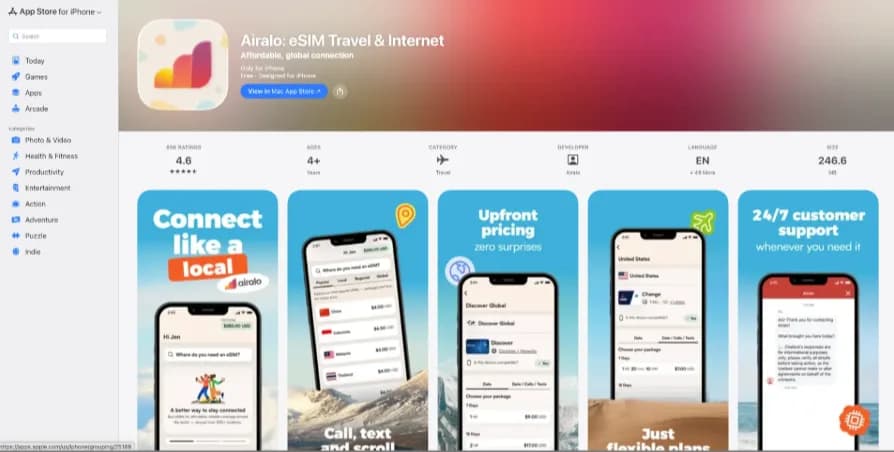

More guides like this
- Apps & InternetWhat AI Works in China? DeepSeek, Qwen and Others
- Apps & InternetDoes iMessage Work in China? Yes, No VPN Needed
- Apps & InternetSaily vs. WannaFlix: The Best VPN for China in 2026?
- Apps & InternetWannaFlix vs ExpressVPN: Which Is Best for China? (2026)
- Apps & InternetIs WeChat Safe? WeChat and Alipay Risks for Travelers
- Apps & InternetIs Public WiFi Safe in China? Security Tips for Travelers
Rules and apps in China change often. Guides are checked against official sources — see our editorial & verification standards. Spotted something out of date? Tell us at [email protected]. Published December 8, 2025.